

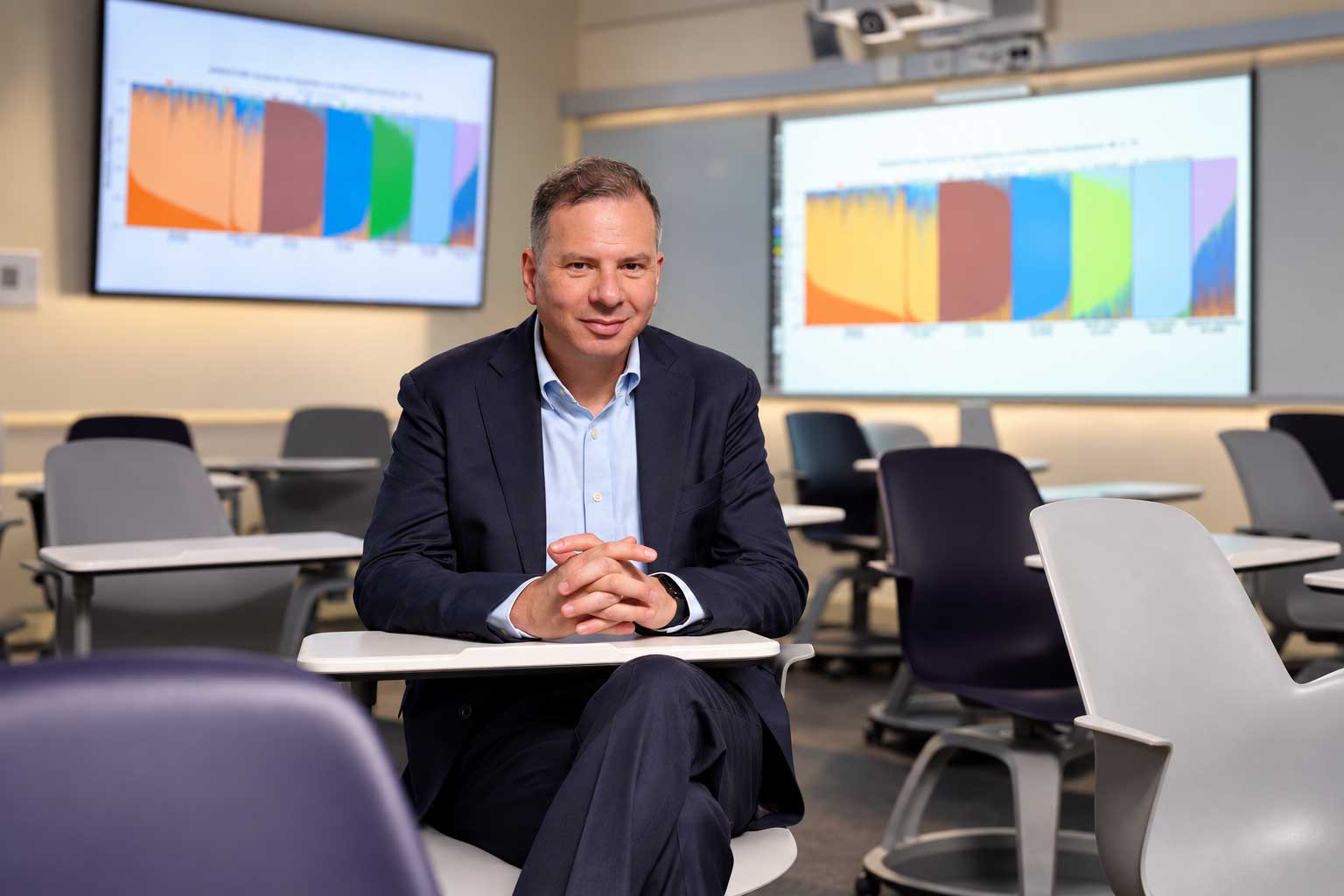
Professor Ahmed Moustafa is a lead researcher in a national effort to map Egyptian genomes, potentially changing how genetic disease, drug response and population history are understood
For much of modern genomics, Egypt has been missing from the picture. Global genomic databases have grown around populations in North America and Western Europe, leaving the Middle East and North Africa severely underrepresented. For Ahmed Moustafa, professor of bioinformatics and genomics at AUC and a member of the scientific committee of the Egypt Genome Project, that absence became increasingly difficult to ignore.
Moustafa began studying computer science at Alexandria University just as the international Human Genome Project was nearing completion in the early 2000s, when biology was becoming increasingly dependent on computation. He went on to earn a PhD in computational genetics at the University of Iowa and complete a postdoctoral fellowship at the J. Craig Venter Institute before returning to Egypt. Working with global genomic databases, he saw firsthand what that absence means for Egypt, the most populous country in the Middle East and North Africa and home to one of the world’s longest continuous records of human habitation.
“The Egypt Genome Project is not the discovery of something entirely new, but the completion of part of a record that had been left blank"
“It is not only an academic problem,” Moustafa explained. “It has direct clinical consequences for Egyptian patients, from the interpretation of their test results to the medicines they are prescribed.”
The Egypt Genome Project, a presidential initiative aligned with Egypt's Vision 2030, was launched in part to address that gap. With the Egypt Center for Research and Regenerative Medicine (ECRRM) as its executive center and Dr. Khaled Amer, professor of general surgery at the Military Medical Academy and former CEO of ECRRM, as its principal investigator, the project aims to build a genomic reference for Egyptians.
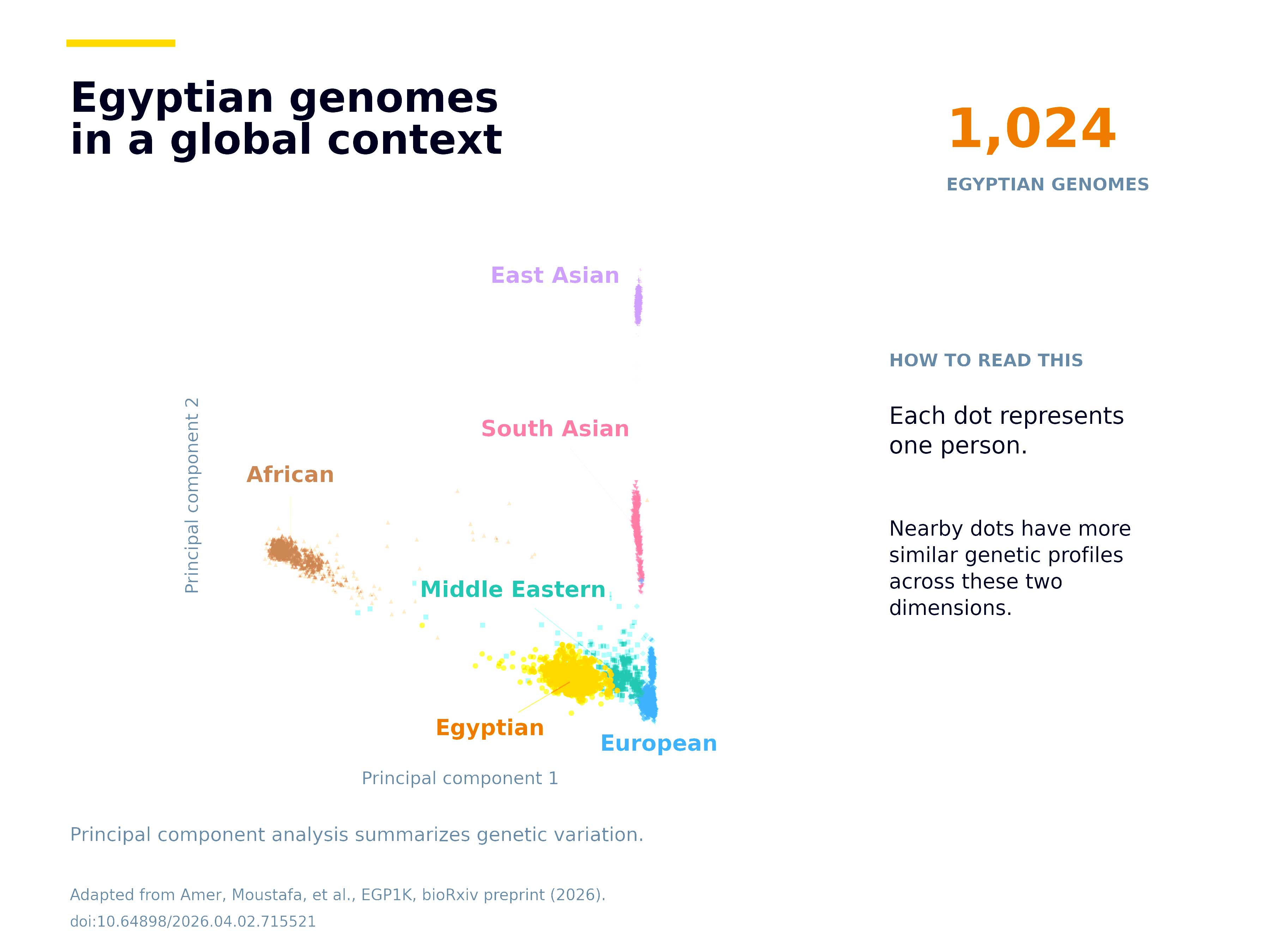
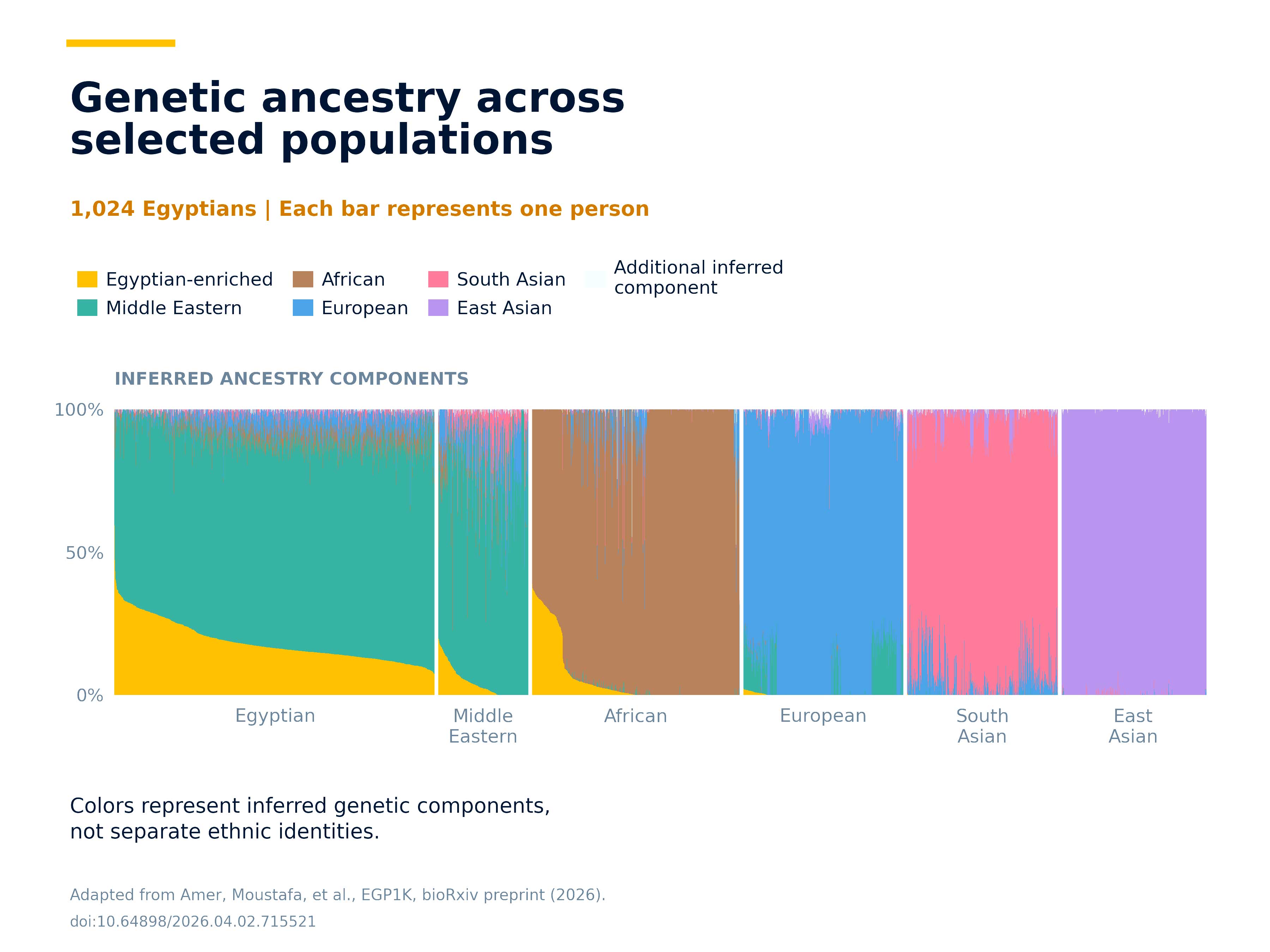
In the project’s first major study titled EGP1K, Moustafa led the bioinformatics analysis of whole genomes from 1,024 Egyptians recruited across 21 of Egypt’s 27 governorates. The researchers identified more than 51 million genetic variants, about 17 million of which were absent from dbSNP, a major international variant catalog.
The numbers reflect more than a scientific milestone. They represent the beginning of a reference that could make genetic information more meaningful for Egyptians. Its long-term impact could extend to better healthcare, including sharper premarital screening, shorter paths to the diagnosis of rare diseases, advances in precision medicine, and improved treatment for cancer and cardiovascular illnesses.
Yet the project’s broader significance may lie in strengthening Egypt’s scientific independence. By building its own genomic reference, Egypt could generate its own diagnostics, pharmaceutical research and clinical guidelines rather than relying on imported data produced elsewhere.
“It has direct clinical consequences for Egyptian patients, from the interpretation of their test results to the medicines they are prescribed.”
Why does this matter? Because a genetic variant can appear rare in a database dominated by European populations even if it is relatively common among Egyptians, potentially triggering a false alarm and sending a patient through unnecessary diagnostic procedures or treatment. Similar problems can arise with polygenic risk scores, which are typically calibrated using European-derived data. “The problem is with the reference data, not with the population,” Moustafa said.
The Egypt Genome Project is designed around three interconnected research arms: healthy population genomics, disease genetics and ancient Egyptian DNA. The healthy population arm establishes the baseline against which disease-related variation can be understood. The disease arm investigates rare inherited diseases, cancers and pharmacogenomics, while the ancient DNA arm opens a different window onto how Egypt’s genetic landscape has changed across thousands of years.
That final component is particularly significant. Ancient DNA cannot simply be used to make sweeping claims about the ancestry of modern-day Egyptians, Moustafa cautioned. The EGP1K findings come from contemporary Egyptians and cannot on their own establish direct genetic continuity with any particular ancient population. That is precisely the question the ancient DNA arm is designed to investigate.
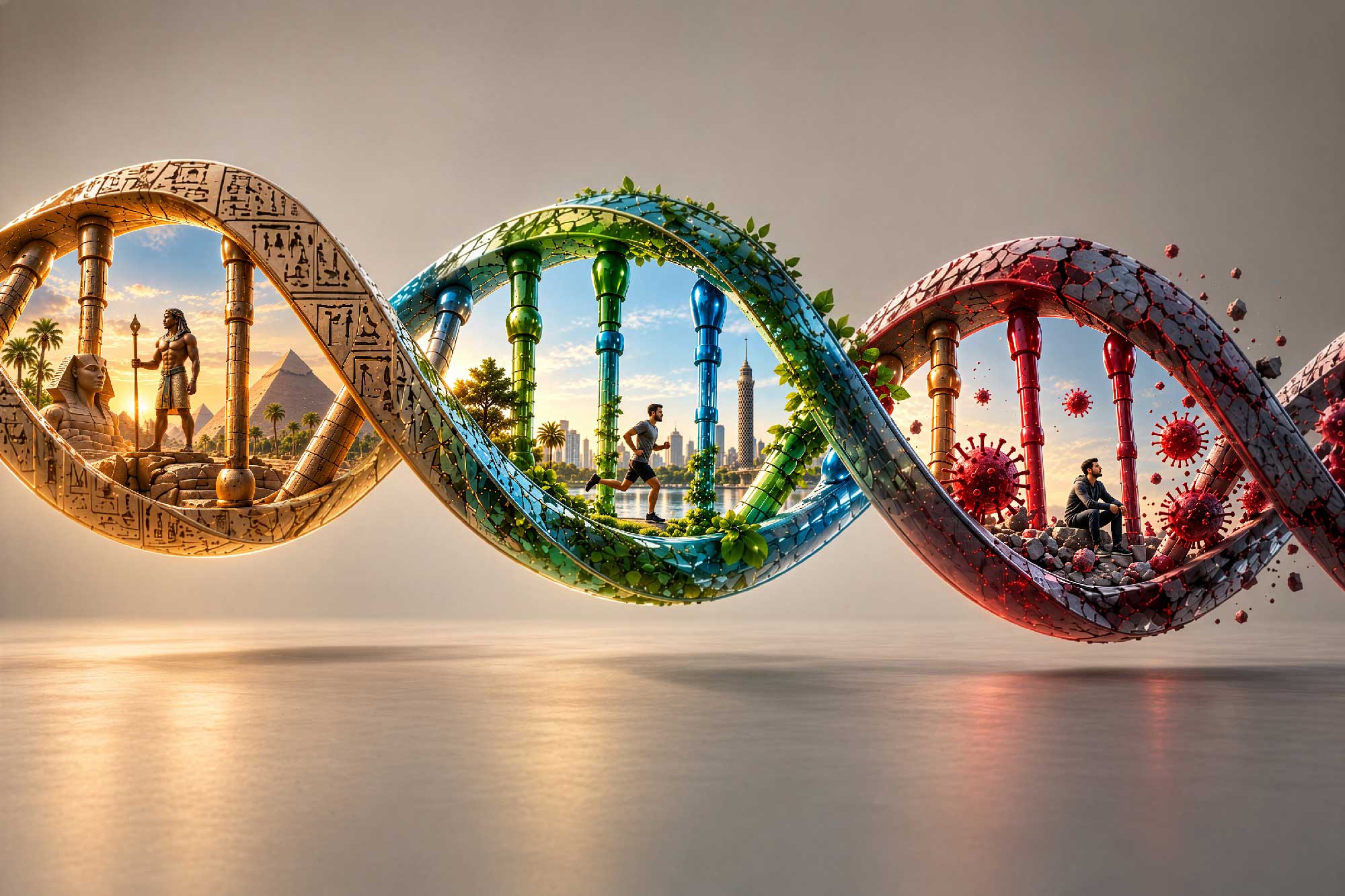
The work is considerably more difficult than sequencing modern DNA. Ancient samples suffer fragmentation, chemical damage and contamination, while Egypt’s heat and humidity make DNA preservation especially challenging. Researchers need specialized clean rooms, protective equipment and computational methods designed specifically for ancient material.
By comparison, modern samples follow a more predictable path. Volunteers provide blood samples through participating centers after informed consent and ethical approval. The samples are transported to ECRRM, where DNA is extracted, sequenced and analyzed. The resulting data remains inside Egypt under controlled access and Egyptian governance.
For students and young researchers in Egypt, the project has opened a field that previously required them to rely on the data of other populations. Now the country has a national dataset generated in Egypt, about Egyptians, along with infrastructure and expertise in large-scale sequencing, population genetics and bioinformatics.
But Moustafa views the people behind the project as its most important legacy. “More than a thousand Egyptians gave blood samples for a project whose benefit most of them will never see personally. Every number in that study rests on someone’s decision to take part,” Moustafa said, noting that the project’s goal is to reach 100,000 genomes by 2032.
That legacy also extends to the young Egyptian researchers carrying out the daily work in ECRRM’s wet laboratory and bioinformatics group, several of whom are AUC graduates. “In my view, this is how a university contributes to a national project. Its contribution comes through the people it trains,” Moustafa affirmed.
The Egypt Genome Project is not simply about placing the country on the genomic map. It is about ensuring future generations of Egyptian patients and scientists will no longer have to navigate a medical and scientific landscape built almost entirely around data from other populations.
“The Egypt Genome Project is not the discovery of something entirely new, but the completion of part of a record that had been left blank. Its practical impact could eventually be seen in better interpretation of genetic tests, safer drug dosing, population-specific screening and the development of a research resource that Egyptian scientists can build on for years to come,” Moustafa said.