

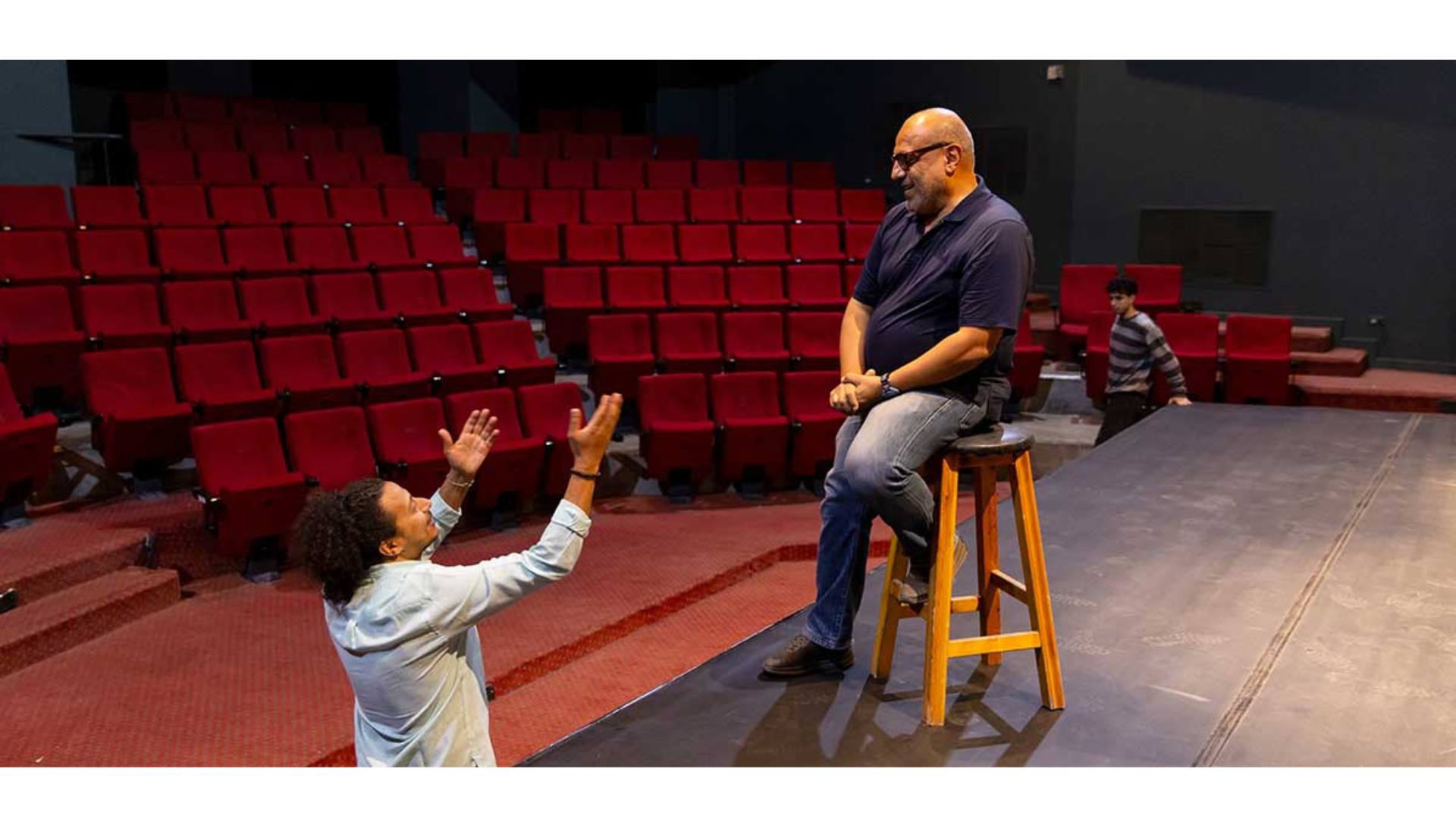
When the lights go down in the Falaki Mainstage Theater at AUC Tahrir Square, anything is possible. “I walked in and never came out,” said Ahmed El Attar ’93. “I felt I found my home.”
If he had to rank the theaters in the city, El Attar said the Falaki Mainstage Theater comes second only to the Cairo Opera House. “It's not just the stage but also the spirit,” he said. “It’s good to have a well-equipped space, but it’s equally important to have people who know what they’re doing. The Falaki theater is one of the best in Cairo.”
El Attar is an independent theatre director, translator, playwright and founder of multiple arts and cultural spaces. His work has shaped contemporary theatre in Egypt and abroad — and it all began by chance.
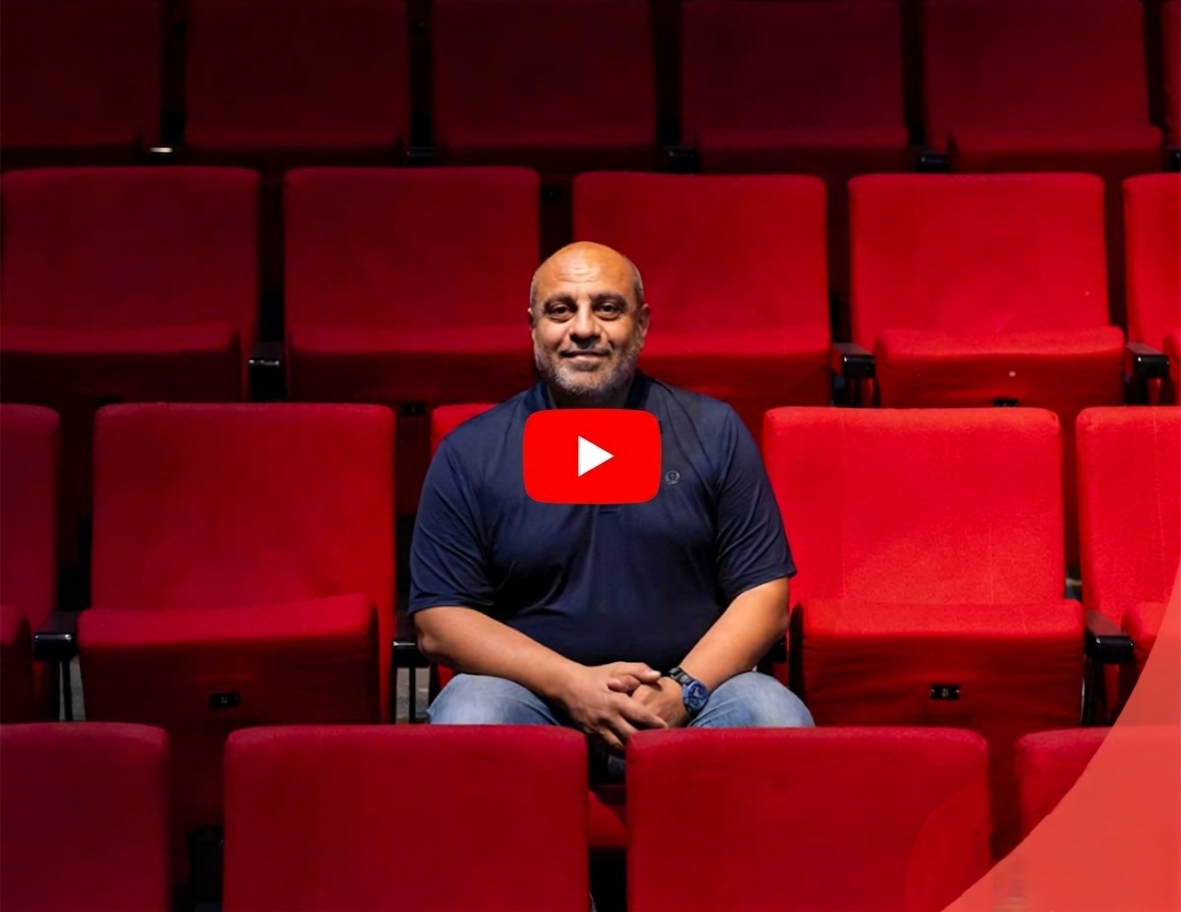
Starting as a computer science major at AUC, El Attar first entered theatre as an assistant stage manager on a friend’s production. “I changed my major to theatre the next semester,” he recalled.
After graduating, AUC offered El Attar and two other alumni the opportunity to return and each direct a one-act play. His final production at the Wallace Theater on the Greek Campus was Oedipus the President, before his work moved to the Falaki Mainstage Theater.
At the time, El Attar asked the theatre program for permission to use the stage during the summer. “I would produce and rehearse my shows there, then I’d take the project on tour,” he said, eventually returning to the same process at Falaki every two years, until the theater shut down during the 2011 revolution.
When the theater reopened in 2012, AUC invited El Attar back in a managerial capacity. At the time, he was already running Studio Emad Eddin, an independent space supporting Cairo’s performing arts scene, and was among the few alumni still working professionally in theatre. He was also preparing to launch D-CAF: Downtown Contemporary Arts Festival, Egypt’s largest international multidisciplinary contemporary arts festival.
His return helped position the Falaki Mainstage Theater as a hub for international collaboration and contemporary performance in Cairo, closely integrating it with D-CAF’s annual programming. Through this partnership, the theater hosted work across performing and visual arts, music and panel discussions — becoming a key venue in Egypt’s independent arts scene.
El Attar’s persistence paid off. In 2015, his work was selected for the Festival d’Avignon in France, one of the world’s most influential theatre festivals. This year, he returns to the Avignon Festival with a new play, Salma, Mon Amour, which will open at the Falaki Mainstage Theater in June 2026 before touring across Europe. “It’s like going to Cannes with a film. You feel confident that you’ve really accomplished something,” he said.
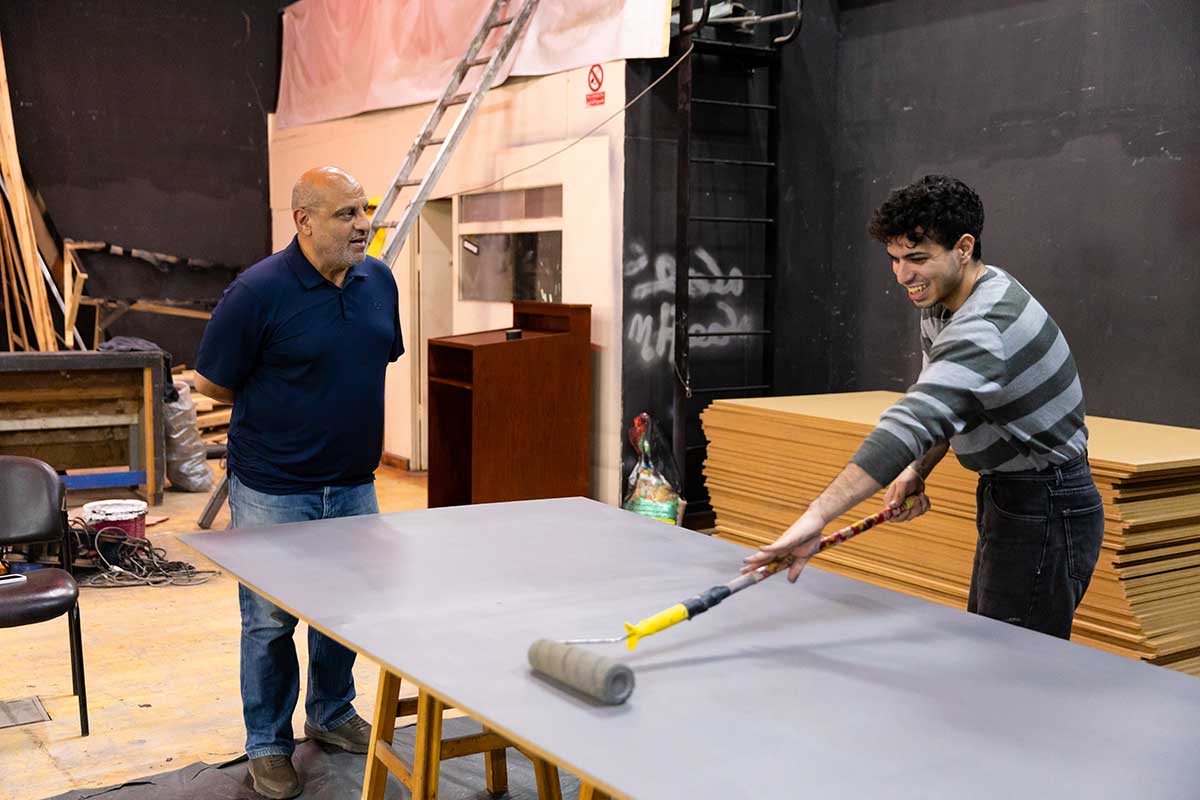
Yet even as his work travels internationally, its foundations remain rooted in the spaces that shaped it. Universities, he said, play a role in theatre similar to Broadway in the commercial sector, acting as key spaces for alternative and emerging work. In Egypt, institutions such as Cairo and Ain Shams universities sustain active student theatre scenes, with regular productions and annual performances.
Within this landscape, AUC stands out not only for its resources but also for having a dedicated theatre program and the infrastructure to sustain it. “That support made a difference,” he said.
In the late 1980s, then-student El Attar worked as an assistant props master on a major production of the Three Sisters by Chekhov. As he described it, the set required a wide range of props: a dining table, chairs, dinnerware and a Russian samovar.
“We looked all over Cairo for this samovar,” he said, referring to the traditional metal urn used to heat water for tea. “It was not easy, but I remember finding it in AUC President Richard F. Pedersen’s office at the time. I was really focused on finding this samovar, and he let us borrow it.”
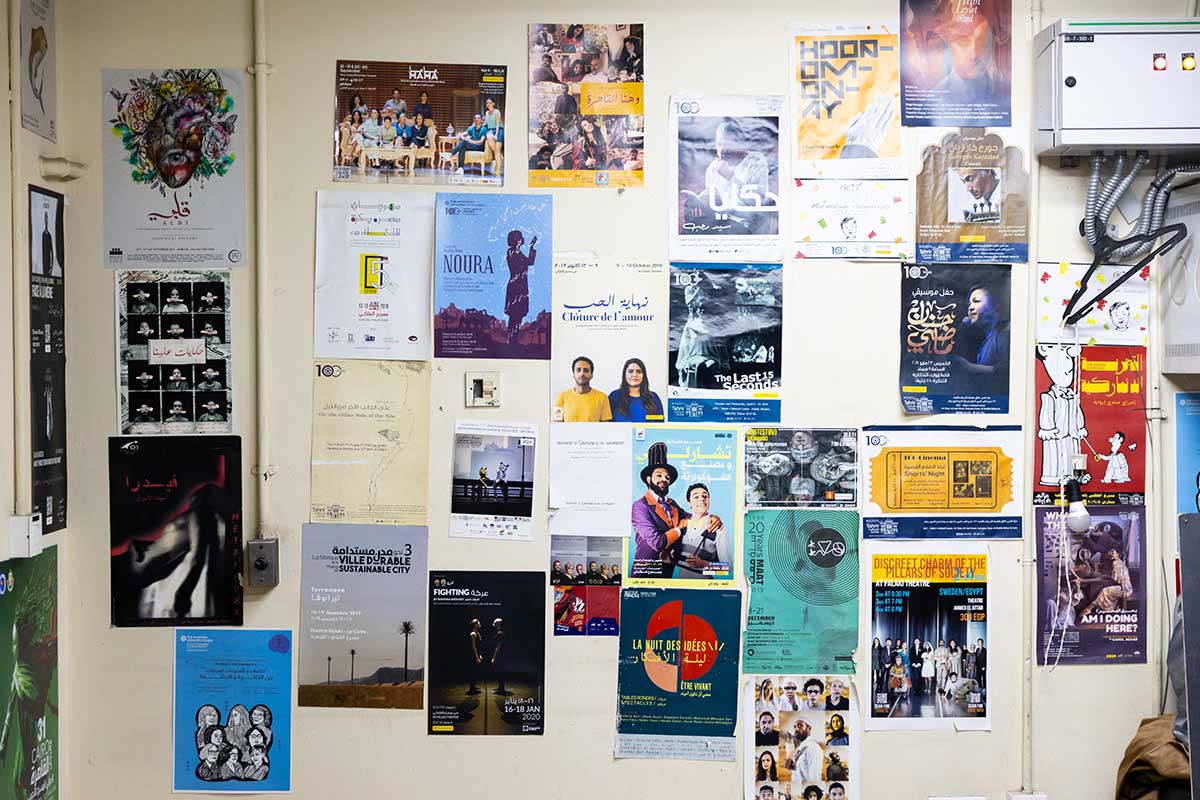
Even in smaller, more incidental moments, there was space to experiment and explore. Like the myriad of characters he brings on stage, El Attar said those involved in theatre come from different backgrounds. “It’s not only about theatre majors; it’s about students from other departments who discover their passion later. They succeed even though they started elsewhere,” he said.
Everyone’s perspective has value, and there’s no wrong time to get involved. That openness, he added, does not make the path easy because success is not linear. “If you’re a banker or an engineer, if you’re good and you work hard — you can climb the ladder,” he said. “But you could be a great artist and still never make it. In art, there are no guarantees.”
Despite international recognition, the Falaki theater holds a special place in El Attar’s journey. “It feels like I never left Falaki,” he said with nostalgia.