

By Dalia Al Nimr
In his book, Age Is Just a Number, the late Charles Eugster recounted his experiences as a retired dental surgeon. He revived his passion for competitive rowing at age 63, ventured into bodybuilding at 87 and embraced sprinting for the first time at 95. His remarkable achievements include securing 40 gold medals in World Masters Rowing, claiming world championship titles in 200-meter indoor and 400-meter outdoor races, and setting world records for his age group in various sports. Eugster died in 2017 at age 97.
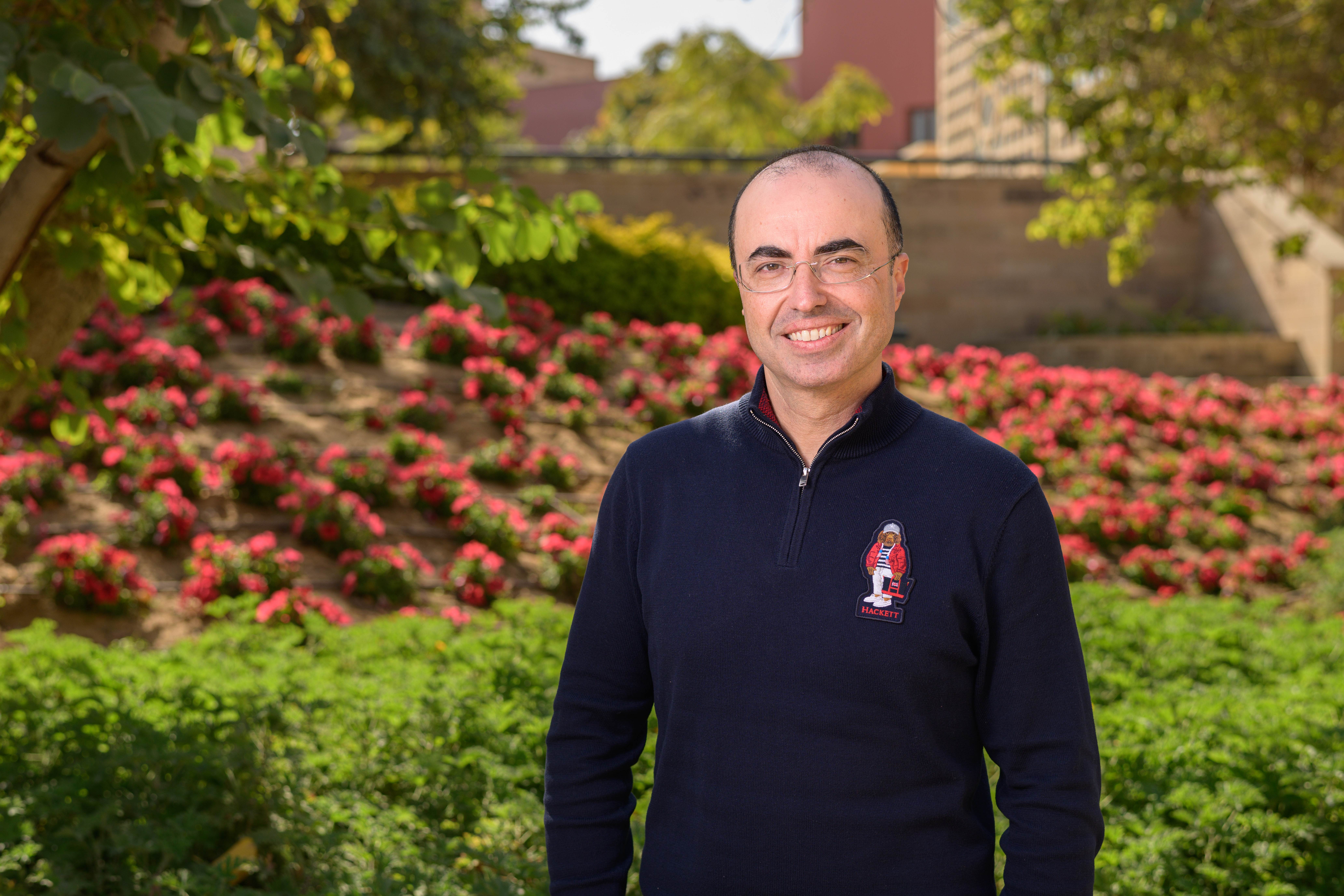
While not everybody can be record- breaking athletes at an older age, it's up to each individual to make the most of their time in this life. "Age is really just a number," said Mohamed Salama, professor at AUC's Institute of Global Health and Human Ecology. "Healthy aging is all in the mindset."
This year, Salama is launching "AL- SEHA [Health]: A Longitudinal Study of Egyptian Healthy Aging," the first nationally representative panel study on aging in Egypt. The first of its kind in the Middle East, the study aims to fill knowledge gaps to help set policies and effective healthcare strategies that improve the lives of the country's elderly population.
AUCToday spoke with Salama on AL-SEHA and what it takes to be happy and healthy.
What is healthy aging?
The word "health" in itself does not connote the absence of disease. Healthy elderly people still have illnesses. The true definition of health is improving one's quality of life. This notion of health is becoming correlated with the term "happy aging," whereby as people age, they are content, independent and engaged in community activities while maintaining a good physical quality of life.
A 2023 paper published in Cell journal argues that aging is a reversible process, based on experiments with mice. Can aging be reversed? Can the body "reset itself?"
Reverse aging is too ambitious. Such experiments have been successful with reverse aging in mice through gene manipulation in a controlled experimental setting. However, humans have different exposures and ways of living. So theoretically yes, the body can reset itself in a controlled environment, but realistically, this can't happen because you can't control all of the variables around you. This is the problem with basic research: oversimplification.
What's a more realistic approach?
Applied research, which is more accurate and aims to improve quality of life while postponing or slowing down the aging process. It's normal to have a decline in cognitive and other functions as you get older. Our role as scientists is to postpone this to 80 or 90 years of age, especially since life expectancy is increasing. So we're looking at a gradual, not sharp, decline that can be accommodated and doesn't hit elderly people hard.
How does that happen?
There are two tracks to study aging: purely biological, which ignores the complexity of human beings, and a social science path, where scientists study human experiences throughout life. The best approach merges both tracks, and this is where longitudinal studies come in.
How does the AL-SEHA study work?
Before getting into the aging phase, which begins at around 45 or 50 years of age, we follow up with individuals who are in good physical and mental health. We do this every couple of years for a decade or two. At age 60, we examine when the decline happens and identify possible contributing factors: Is it specific experiences they went through, such as work, diet, sports or marriage? Is it where they live or how much education they have completed? Embracing the complexity of human beings is a main pillar in longitudinal studies, and such determinants provide us with real-time data to analyze.
"We need to embrace aging and understand its determinants. It's a normal process."
How do you use this data to assess cognitive aging?
We identify modifiable risk factors. So far, there are 12: lower levels of education, physical inactivity, air pollution, excessive alcohol, smoking, head injury, infrequent social contact, obesity, hypertension, diabetes, depression and hearing impairment. If we can control them, we'll probably be able to postpone, decrease, slow down and, in some cases, eliminate the risk by up to 40%. We basically match each of these lifestyle aspects with biological factors.
Can you illustrate this from everyday life?
Take education, for example. The number of years of education is directly proportional to cognitive functions. The more educated you are, the lesser the chance of cognitive decline. Continuing education and graduate studies are even better. Also, people who are skilled in memorization have a high cognitive reserve, meaning their brains are resilient to new demands and damage and are therefore less likely to develop cognitive diseases later on. Family coherence, or the degree of love from primary caregivers, also affects cognitive functions among the elderly. Even coffee can protect against neurological diseases and cognitive decline. Studies have shown that four cups of coffee a day could help prevent Parkinson's and dementia. On the other hand, stress, trauma and pollution can negatively affect cognitive processes.
Why are aging studies important?
There has been a growing global interest in healthy aging studies because they reveal the challenges and opportunities that will face the world in the future, especially in low- and middle-income countries that suffer from a lack of data in this field. Aging studies can help prevent the development of major diseases, such as cancer and dementia, including Alzheimer's.
What is different about the study you're conducting?
AL-SEHA is the first to apply the U.S.- based health and retirement survey, which has been implemented on a global scale, to the Middle East. With longitudinal studies, it's important
to understand the human condition in one's own country versus others. For example, a study conducted in a war-torn country will be different from one where there is no conflict because human experiences and exposures stand in stark contrast.
Why start with Egypt?
Egypt is the most populated country in the Middle East and the third in Africa. Although the country's population is relatively young, the number of elderly people is rising. Egypt is in an ideal position to prepare its population for healthy aging to help reduce access inequities and age-based discrimination while facilitating the evaluation of current health policies.
How big is the project?
It started in 2021 with a pilot study in coordination with AUC's Social Research Center and will expand to include about 20,000 participants aged over 50, representing all of Egypt's governorates. The study will span at least 10 years, with researchers following up with participants every two years to track changes in their health. We will collaborate with government agencies, civil society and nonprofit organizations in Egypt, in addition to the SHARE project, which researches the connection between policy and quality of life for European citizens and beyond.
What's the main message you wish to convey through this research?
Aging is not a disease. If people view aging as a biological problem or illness, their life expectancy falls back four years. There is still a misconception that the elderly should retire and stay at home. On the contrary, working reduces the chances of a sharp decline in health and cognitive functions. We shouldn't make the elderly feel like they have a problem. There will be some decline, of course, but one can remain healthy at 70, 80 and even 90 years of age. We need to embrace aging and understand its determinants. It's a normal process and shouldn't be accompanied by major morbidities or lethal diseases.