

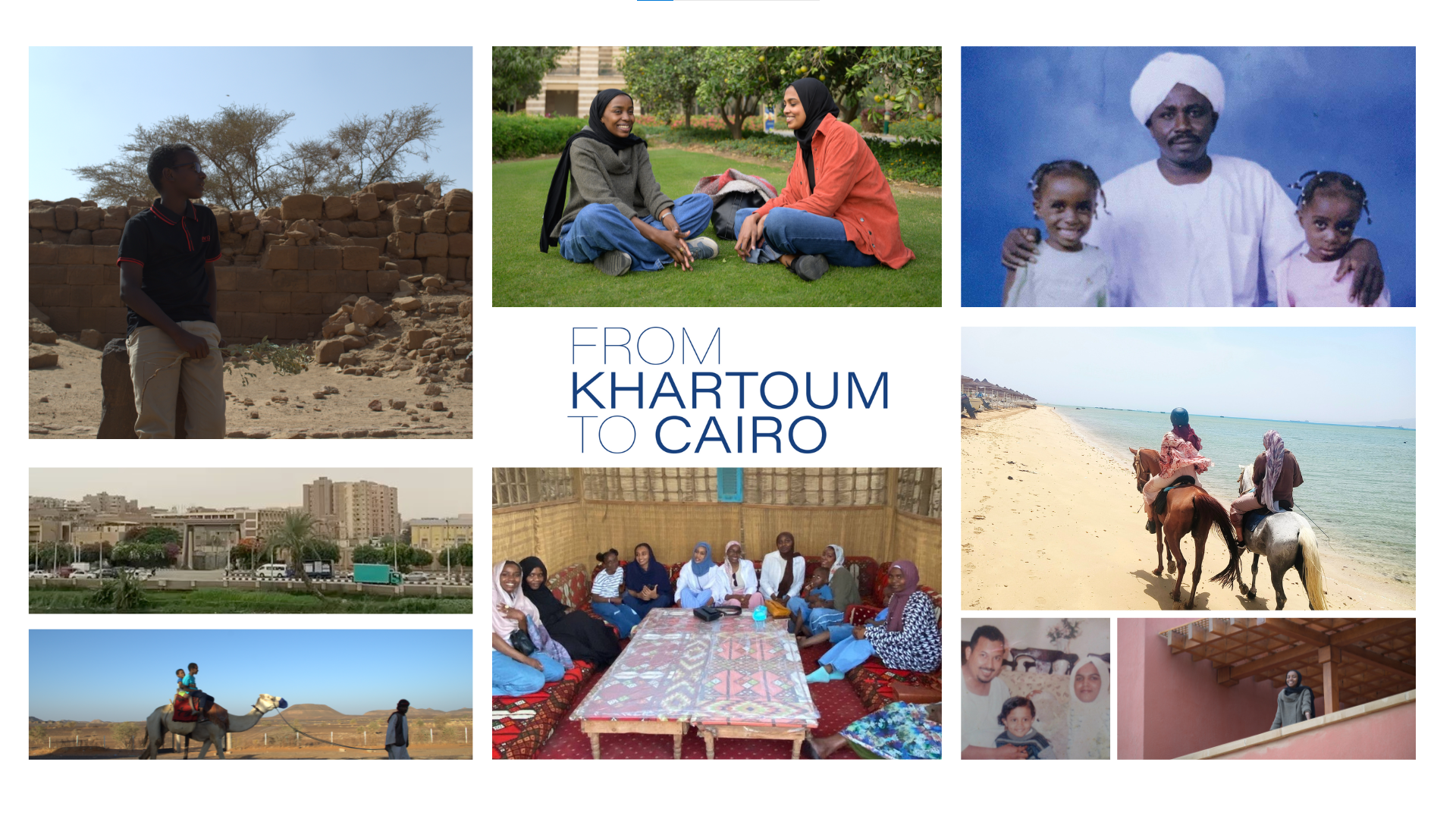
Rawan Alsaddig was baking cookies when her neighborhood in Khartoum was bombed on Eid Al-Fitr in 2023.
“It felt like an earthquake,” she recalls. “We were being bombed, but I didn’t know from where.”
The eldest of eight, Alsaddig watched over her younger siblings as the bombardment lasted more than four hours. She called relatives abroad to say goodbye, unsure if she would survive. When the bombing stopped, she couldn’t speak for a day. Her family packed what they could carry and fled.
Nearly three years later, Alsaddig now lives in Cairo, pursuing a Master of Global Public Health at AUC, where survival turned into direction. “After that night, it was a blessing seeing my family again,” she says.
Her story echoes that of many Sudanese students whose lives were uprooted by the civil war. Some fled to neighboring countries; others endured weeks of anxiety waiting for news from loved ones. Many hope to return home after graduation to help rebuild Sudan.
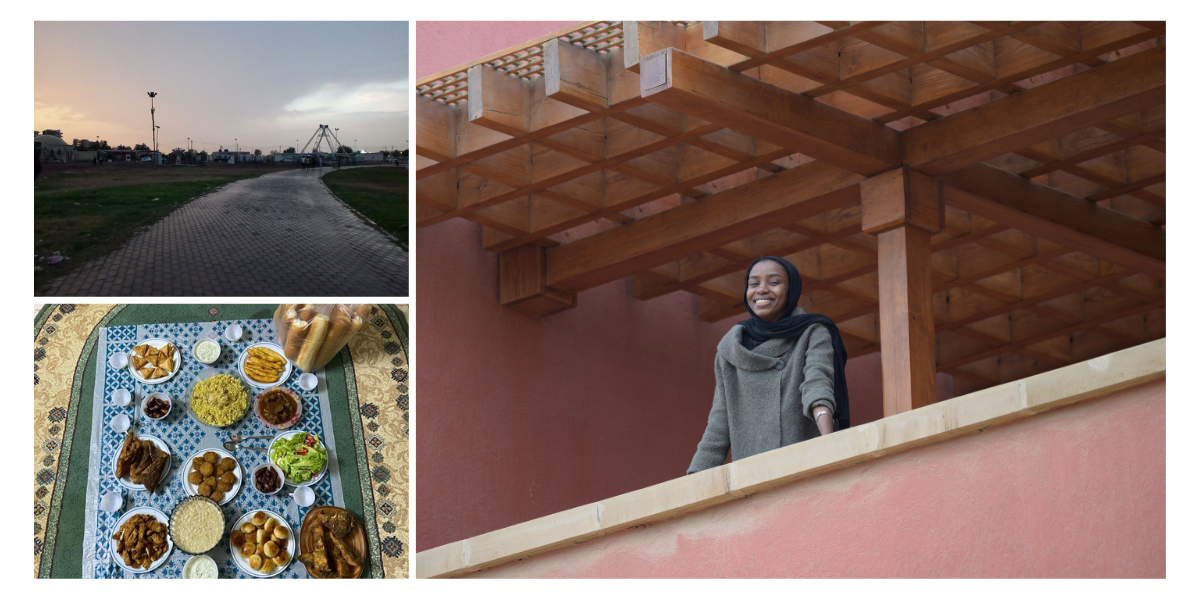
A photo of Alsaddig's neighborhood park in Khartoum and food shared with family. Photos courtesy of Ahmad El-Nemr and Rawan Alsaddig.
The ongoing conflict has displaced over 9 million people internally and 4 million people to neighboring countries, with an estimated death toll of over 150,000. For students like Nasma Suleiman, a mechanical engineering freshman, the war disrupted education directly. The war began while Suleiman was on vacation after her freshman year at Future University in Khartoum, and her family relocated to Ethiopia. She had to retake her final year of high school there because her college transcripts were inaccessible. “I had to start over,” she says.
Suleiman began her studies at AUC in Fall 2025, rebuilding not just her education but a sense of continuity. “I’m still learning the culture,” she says. “I was used to Sudan then Ethiopia and now Cairo. Meeting other students from conflict zones like Libya and Palestine makes it relatable.”
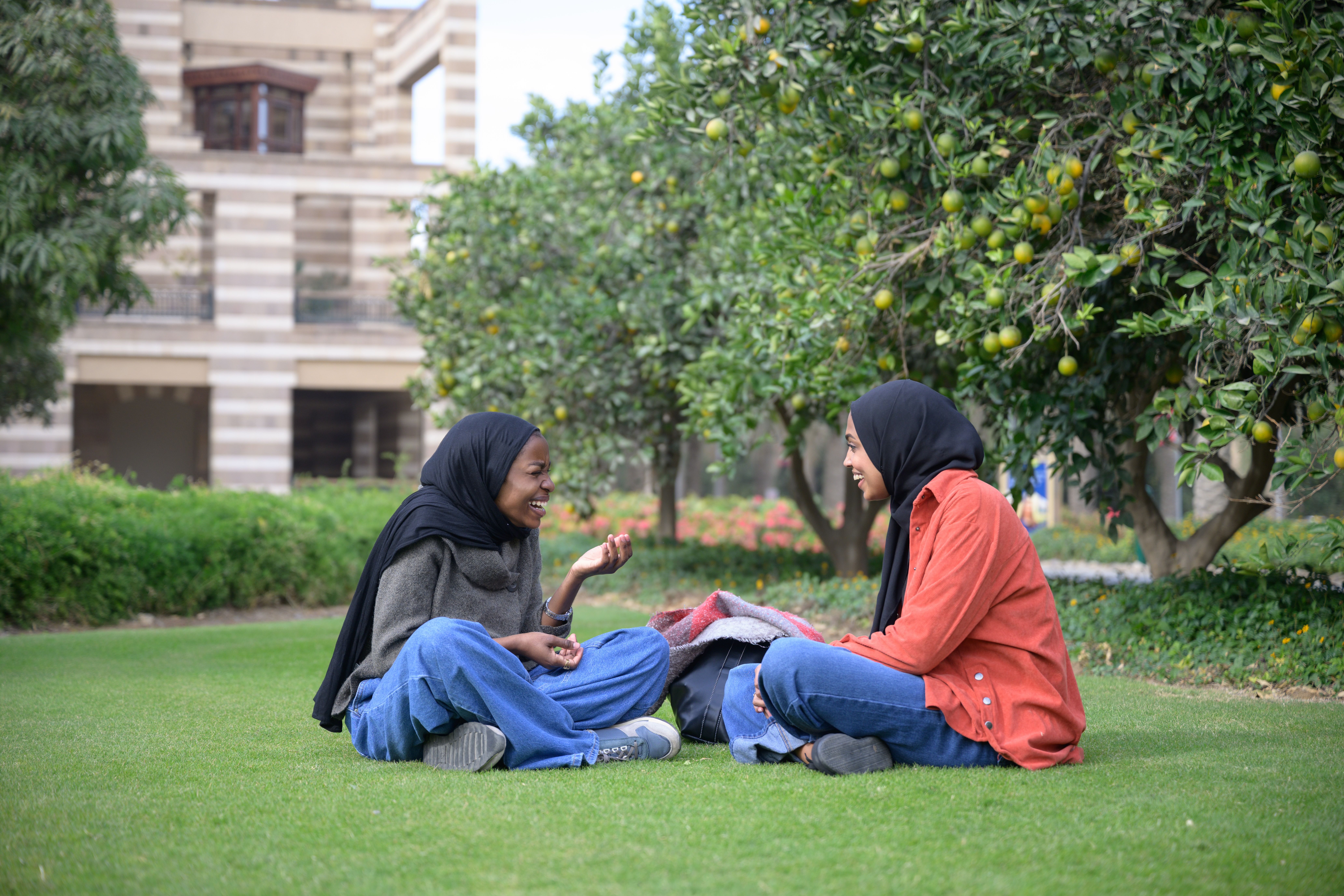
Rawan Alsaddig and Esraa Mohamed sit and talk on campus. Photo courtesy of Ahmad El-Nemr.
For students of the Sudanese diaspora, the war is a distant yet visceral presence. Esraa Mohamed, a graduate student in community psychology, grew up in Cairo to Sudanese parents. “It impacted everyone in Sudan,” she says. “But when it’s someone you know — family or friends — it hits even harder. Sometimes you can’t reach anyone for two weeks. You never know if the phones or internet will come back.”
Mohamed graduated in 2020 from Ain Shams University with a bachelor’s degree in psychology and began working in the mental health program of a refugee organization. “I was interacting directly and supporting people who have mental health issues, and that experience led to burnout,” she says. “I felt that even if I want to do this, it is not the right format.”

Esraa Mohamed is a graduate student pursuing a master's in community psychology from AUC. Photo courtesy of Ahmad El-Nemr.
AUC offered Mohamed a way to rethink what care could look like, so she decided to pursue her master’s in community psychology. She has applied lessons to her new job monitoring and evaluating the community partnerships her organization funds. “I felt that if I combine both my experience and academic studies, it’s going to improve the work that I’m doing in the community. I’m really enjoying it, and it’s impacting my discussions and meetings at work.”
Ahmed Amara, a computer science freshman, was born in Sudan, but he spent much of his childhood moving between countries. “My favorite memories are of friends in my neighborhood: football in the street, trips to the supermarket, prayers at the mosque,” he says.
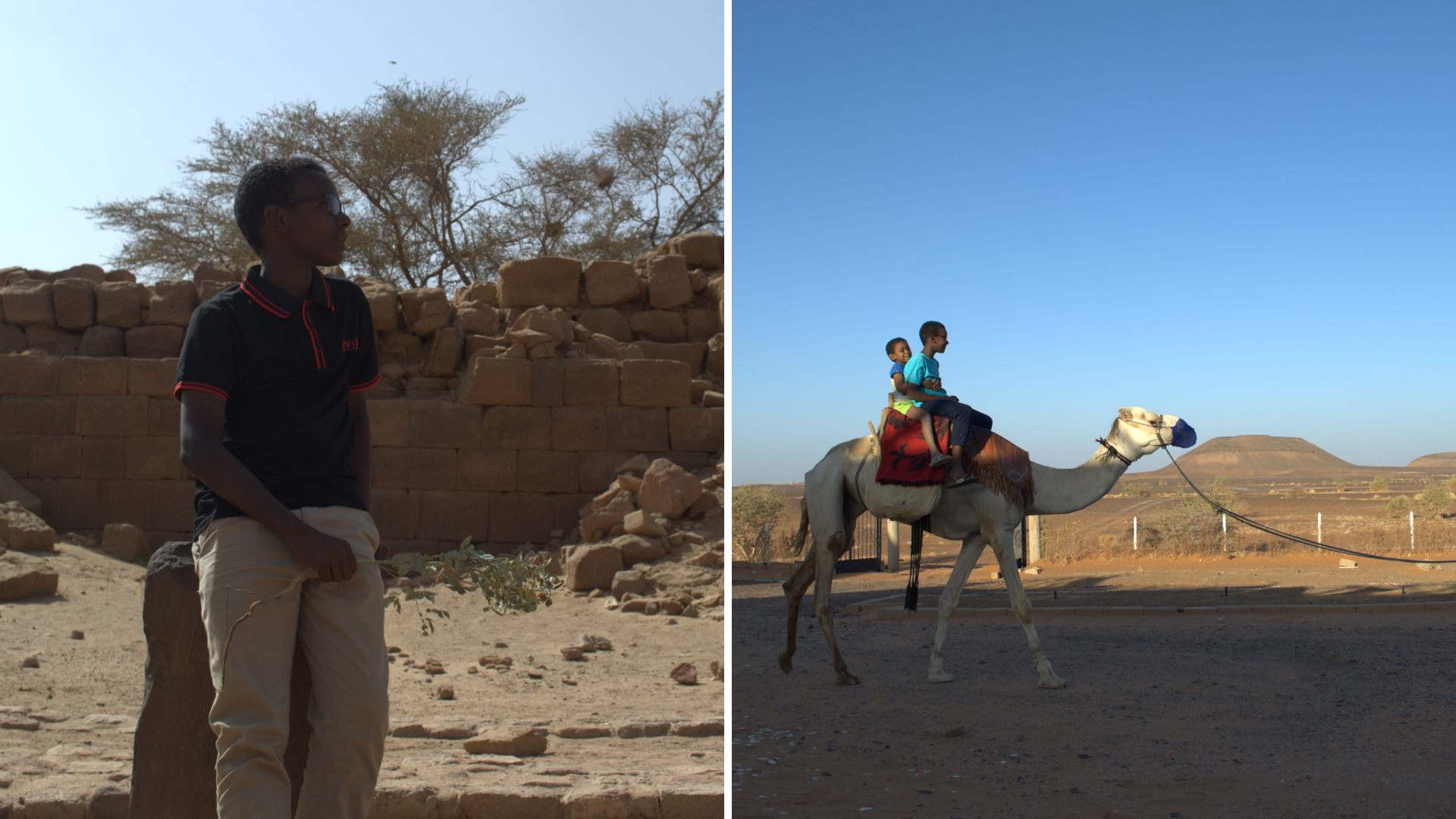
Ahmed Amara as a young child, during a trip to visit Nubian pyramids in Sudan. Photos courtesy of Ahmed Amara.
Amara studies at AUC on the new Sudanese Undergraduate Scholarship, which covers full tuition and housing. A childhood love for video games inspired Amara to major in computer science and pursue a career in cybersecurity and artificial intelligence. His introductory computer science classes have emphasized experiential learning. “AUC helps you with the practical side of things,” Amara says. “You can really exercise and get your hands dirty with the work that you’re doing.”
In preparation for a career in cybersecurity, he’s interested in studying the field of white-hat hacking, or ethical hacking, which identifies and tests a system’s vulnerabilities to learn how to best safeguard it. “I find it fascinating to learn about ethical hacking and how to protect large companies from cyberattacks,” Amara says.
AUC’s Core Curriculum grounds Amara’s technical interests in the liberal arts, and he says the variety of themes to choose from “broadens your understanding of the world around you.” Through exploring the theme of cultural heritage and Egyptian identity, he has found other connections between Egypt and Sudan, besides the heat. “I find it fascinating to learn more about Egyptian culture since it closely relates to Sudanese culture, as we were once one country,” Amara says.
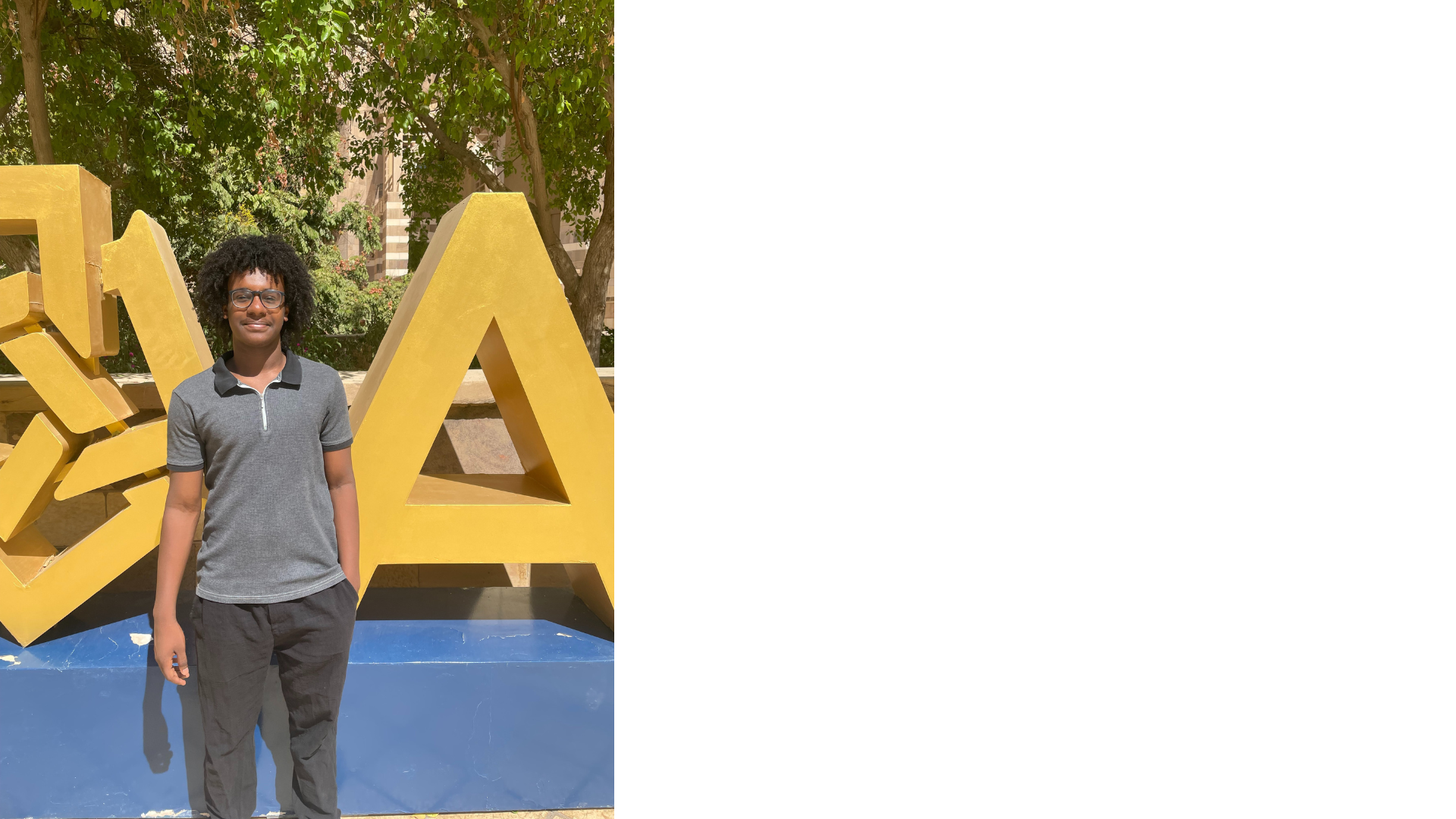
Ahmed Amara during his first year at AUC.
While settling in another country can be daunting, many of Amara’s friends and family previously relocated to Egypt after fleeing the war in Sudan. Though one day he hopes to return after the war, he feels like Egypt has welcomed him with open arms. “Egypt really feels like my home now, and AUC is really a great university,” Amara says.
After finishing her master’s at AUC, Alsaddig hopes to open a clinic in Sudan to serve members of her community still dealing with the challenges of seeking healthcare in a conflict zone. “By taking this master’s degree, I am hoping to understand the situation and make the right decisions in order to mitigate the impact of war in the future and find practical solutions to strengthen the healthcare system in Sudan,” she says.

Rawan Alsaddig is a graduate student pursuing a Master of Global Health at AUC. Photo courtesy of Ahmad El-Nemr.
Also hoping for new beginnings, Suleiman has plans to launch Sudan’s first online marketplace. She hopes to leverage the friendships and international connections she has made at AUC to create the marketplace and help rebuild Sudan’s economy.
“People will need new opportunities,” Suleiman says. “I want to make a difference. This could be a fresh start for the country.”