

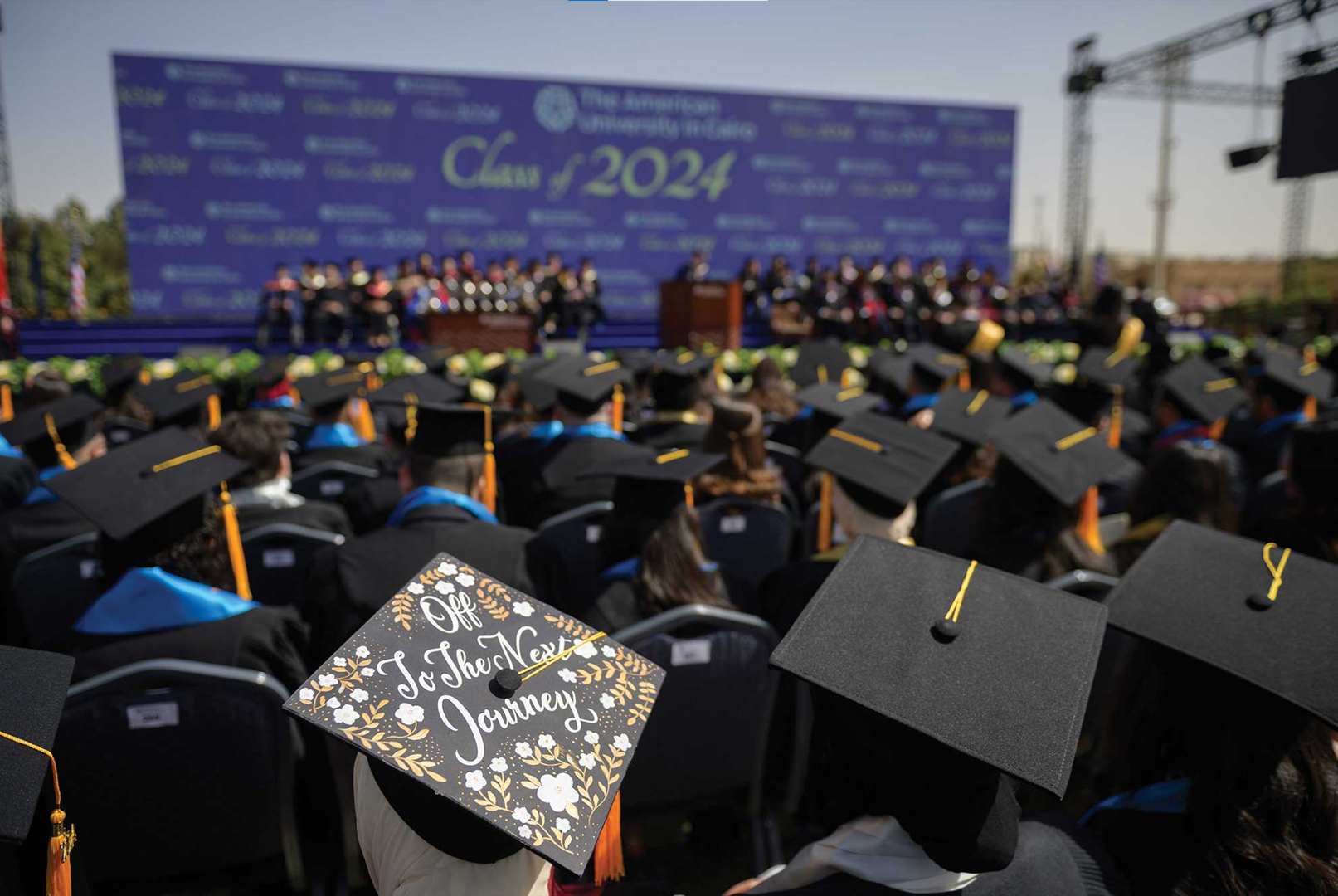
Many students believe they must have their career path fully mapped out before graduating — but does it have to be? Maha El Moslemany ’03, senior director of AUC’s Career Center, challenges the idea that students must have a fixed path before graduation and offers guidance for navigating the twists and turns of today’s job market.
Misconception: Students need a fixed career plan before finishing university.
Fact: Careers are no longer linear. In today’s dynamic job market, graduates may pivot multiple times. Statistics suggest people change roles three to seven times across their careers. A student’s major doesn’t dictate their path; what matters most are the knowledge and skills they gain and how they communicate them professionally.
A student’s major doesn’t dictate their path; what matters most are the knowledge and skills they gain and how they communicate them professionally.
Misconception: Focusing on one career goal means you can’t explore other options.
Fact: Career exploration and experiential learning are essential through job shadowing, campus events like Career Circles or employer information sessions and early externships. Internships, volunteering, competitions and co-ops help students clarify what they don’t want, narrow their options and focus on two or three concrete career paths.
Misconception: Technical skills alone make students employable.
Fact: Across industries, human skills are just as important as tech and digital literacy. Emotional intelligence, professionalism, leadership, teamwork, communication, critical thinking and career self-management are constantly in demand, giving students the adaptability and resilience to succeed across roles, sectors and transitions.
Across industries, human skills are just as important as tech and digital literacy.
Misconception: Universities can’t prepare students for careers unless they know exactly what they want.
Fact: Students can start exploring careers from day one. Universities can prioritize career and world readiness, embedding them inside and outside the classroom through early self-assessment, field exposure, labor market insights, reflective assignments, structured internships and networking. This allows students to test options without pressure to have all the answers.
Misconception: Career plans are set in stone and can’t be adjusted later.
Fact: When in doubt, students should start with self-assessments to clarify their strengths, interests and values, ensuring any career pivot aligns with their priorities. Adjustments can come through upskilling, certifications, internships or volunteering, while leveraging transferable skills on resumes and LinkedIn. Career crossroads are inevitable, and strong career management helps in navigating change with confidence.
Misconception: Students should commit to a career path early to stay competitive.
Fact: Rapid changes — like automation, emerging industries and remote or hybrid work — mean many future roles are still evolving. Committing too rigidly or too early can limit flexibility. By choosing an initial direction, building transferable skills, using career services and staying attuned to market shifts, students can adapt their paths as the world of work evolves.

Career crossroads are inevitable, and strong career management helps in navigating change with confidence.