In Al-Khalifa, students discover that learning a language can also mean understanding how communities protect their stories.
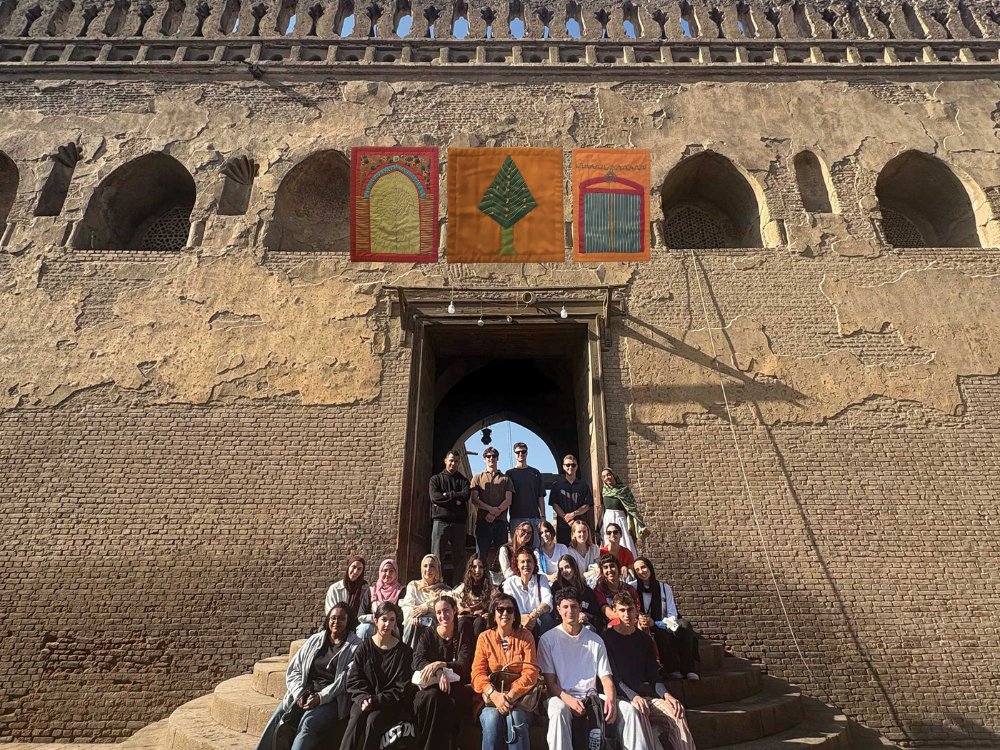
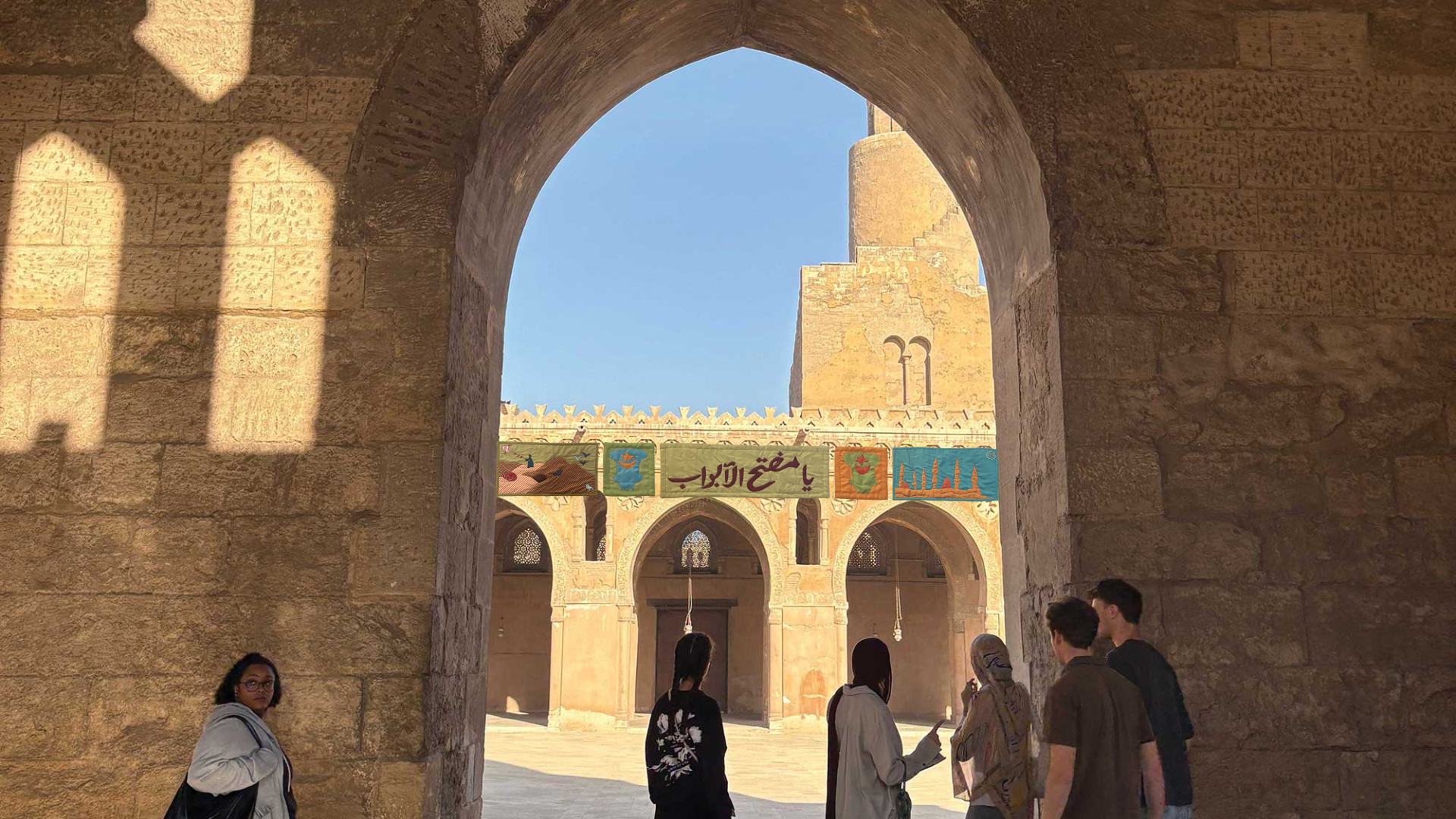
In the shade of the grandiose Ibn Tulun Mosque, a group of AUC students took in the stone facade and intricate detail. AUC Arabic classes — Hebatallah Salem’s Modern Standard Arabic and Shahira Yacourt’s Egyptian Colloquial Arabic — came together to learn about community empowerment initiatives in the Al-Khalifa neighborhood surrounding the mosque, aiming to lend a hand to the community in their efforts toward urban regeneration, economic advancement and heritage preservation.
Historic Mosque, Historic Community
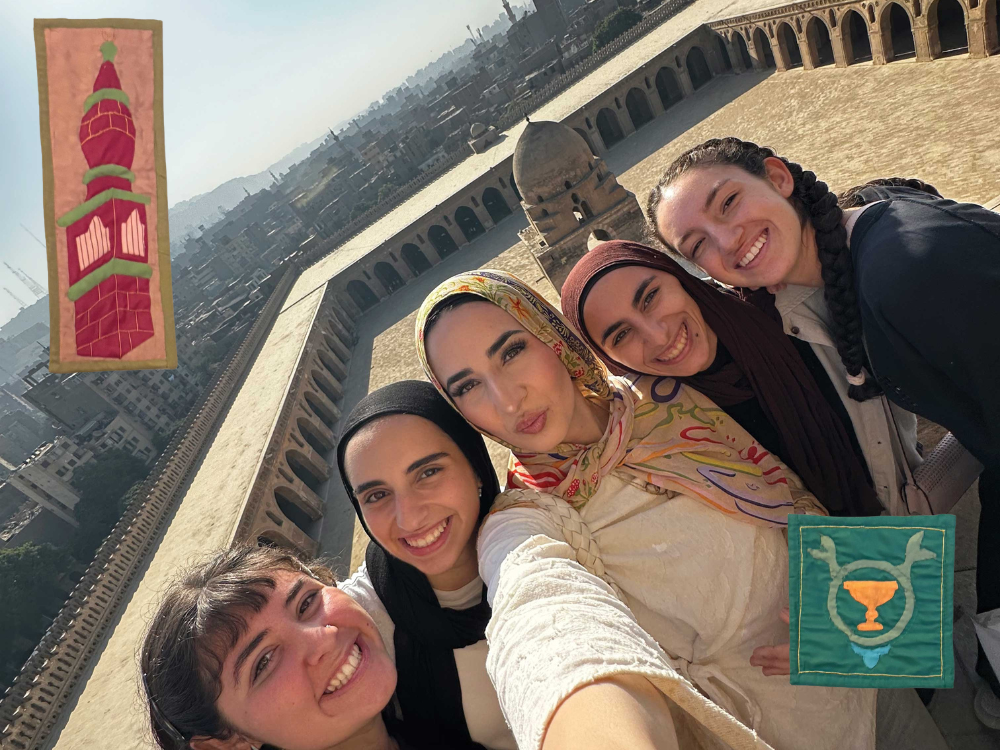
Guided by Salem, senior instructor II in the Department of Arabic Language Instruction, heritage speakers and international students explored the Ibn Tulun mosque, a ninth-century architectural masterpiece. “You must see the mosque to understand the community,” Salem explained.
Restored in the 20th century, the mosque’s spiral minaret and hypostyle plan are unique in Cairo. Beyond the structure, restoration efforts have helped empower the surrounding neighborhood, making the space feel alive and welcoming. “For heritage to thrive, it’s people that matter,” said student Noor Ahmad. “Being here makes you feel part of the community and responsible for protecting it.”
Students then visited the Al-Saliba House, home to the Athar Lina Heritage Design Thinking School — part of the Athar Lina initiative run by Megawra–Built Environment Collective — where women preserve their history through textile work while gaining practical skills. Observing the space, American student Rida Syeda noted, “You can feel how the community supports one another. It’s inspiring to see students, residents and artisans working together.”
“For heritage to thrive, it’s people that matter. Being here makes you feel part of the community and responsible for protecting it.”
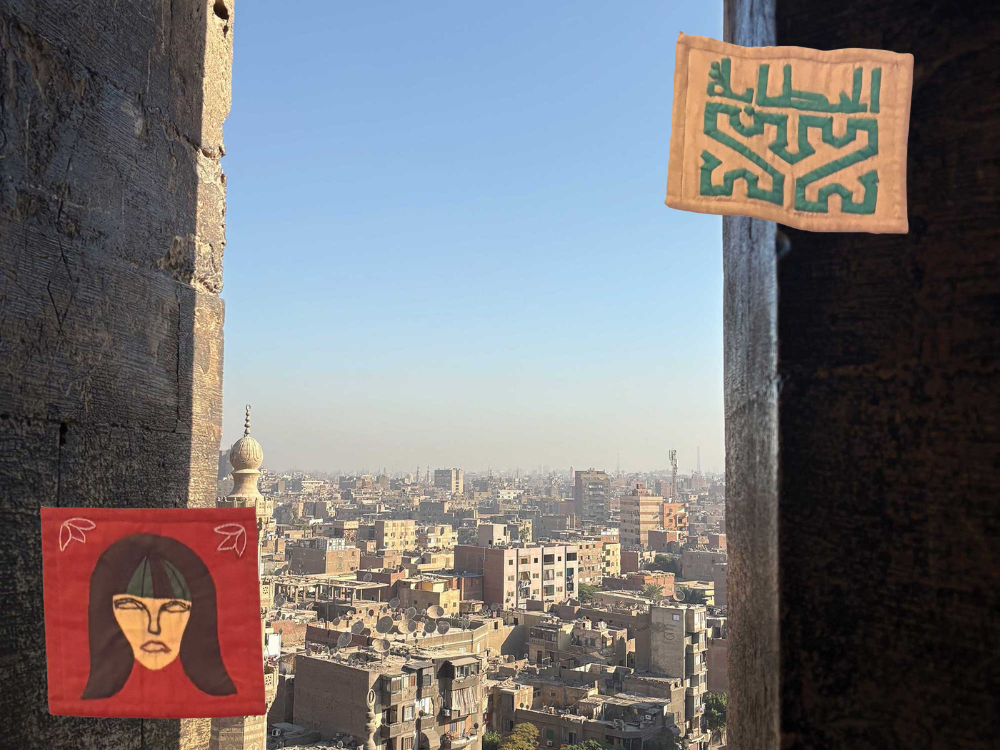
The group also explored murals and urban initiatives, from community gardens to playgrounds on former dumps. “Street art and neighborhood projects help preserve stories and culture,” Salem said.
For the class, the cultural and linguistic experience was eye-opening. “I learned that historic preservation takes the love of a community,” Syeda reflected. “Walking these streets, you realize heritage isn’t just buildings — it’s about people, and we as students feel part of that story.”
Teaching Heritage
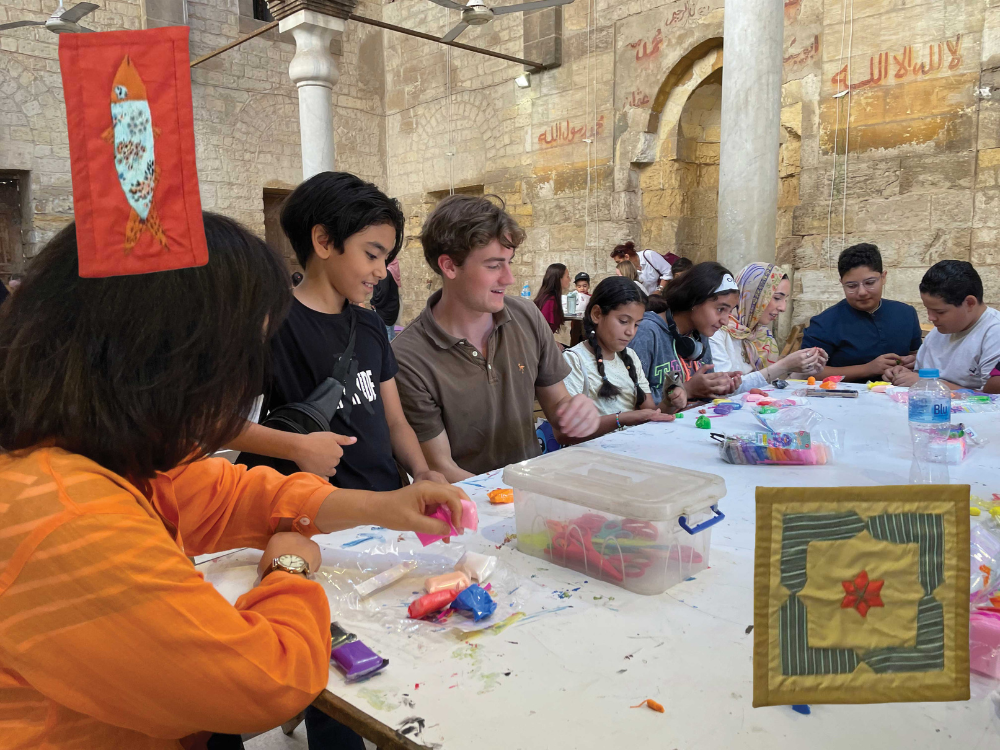
When Megawra first started to develop its preservation efforts in Al-Khalifa through Athar Lina, they asked the local community what would most benefit them. From there, they developed the children’s summer camp, a place for kids to come together, play and learn about the cultural history of their neighborhood.
The camp itself is hosted in a restored hospital that had been deserted for over a century. It is now a community center, where AUC students spent the afternoon with local kids, connecting linguistic skill to social responsibility. They cut string to make bracelets, molded clay into toys and applied colorful paint to eager faces. Arabic flowed through the room, with students who had been shy at first now excitedly sharing their vocabulary with the children. Between the ancient stone arches and stacks of toys, the students saw firsthand the impact of community empowerment and how it can ripple into positive development.
In preserving the heritage of the community, the Al-Khalifans spread those lessons to the AUC students. Preservation and development go hand in hand, in ways the students hadn’t previously considered.
“I thought Egypt might be behind in terms of alleviating social challenges,” said Archie Stride, British exchange student in the Egyptian Colloquial Arabic class. “But here I’m seeing community projects like I’ve never seen in the West. Seeing this community-run alternative is empowering. The bottom-up nature gets people involved from the beginning, and there’s a very positive aspect to that.”