

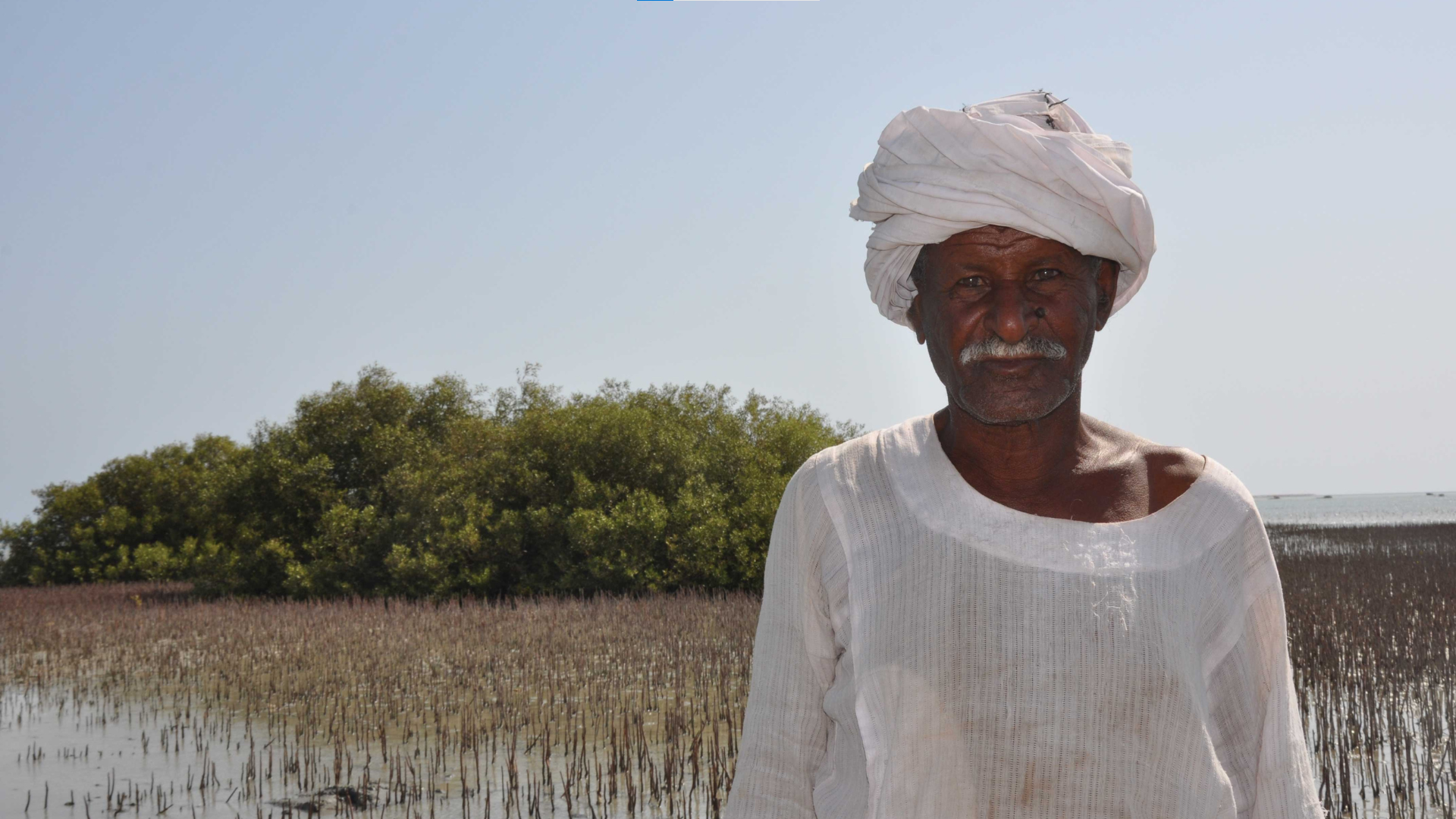
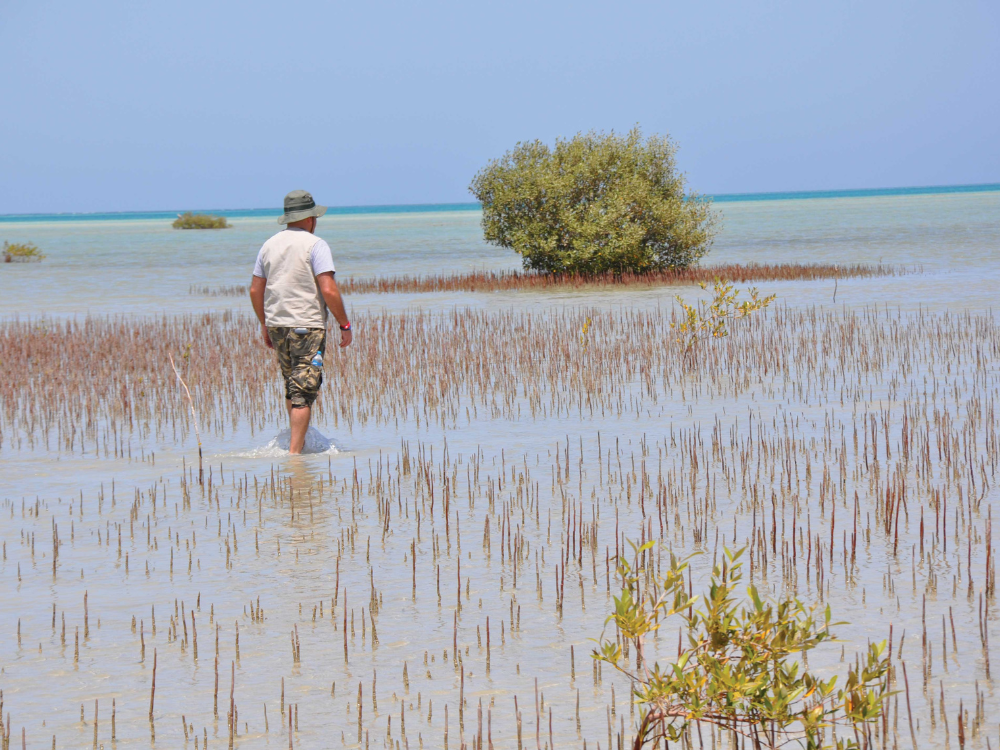
Picture a mangrove emerging from salty coastal zones, its thin bark rises like fingers out of the shallow waters, its strong roots protecting the vulnerable shorelines from erosion, its unique habitat promoting biodiversity. Mangrove forests take in additional carbon dioxide from the surrounding air, sequestering five times more carbon than standard trees and locking it into the soil. Egypt’s Red Sea is one of the few habitats with the right conditions for mangrove forests, yet without sustained local interest or investment, these ecosystems have slowly started to disappear. The mangrove’s potential for economic, environmental and community growth has been forgotten.
That is, until 2021, when a group of researchers from AUC’s Center for Applied Research on the Environment and Sustainability (CARES) wondered: What if these communities could help bring the mangroves back?
The Mangrove Ecosystem Restoration Model (MERS) was born not just to replant mangroves, but to root their survival within the community itself.
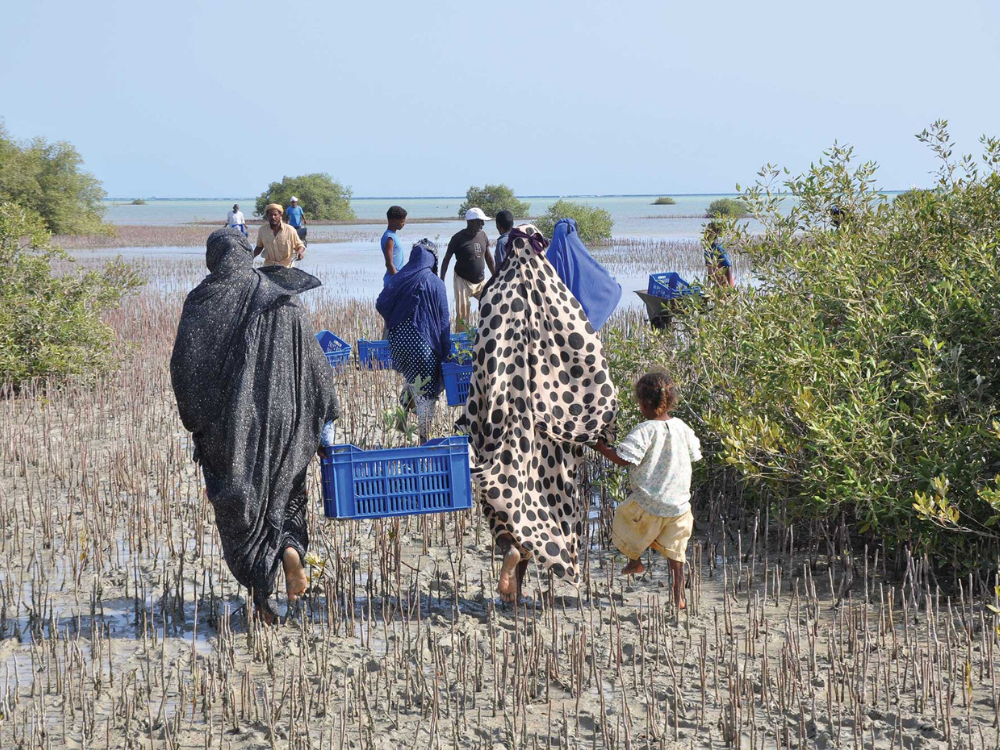
Planting a Community
“The team was inspired by the unique mangrove ecosystems that flourish in challenging environments,” explained Hossam El Zayat, CARES deputy director and program manager who designed the original MERS proposal. “Observing how natural systems support biodiversity, safeguard coastlines and offer resilience against climate change highlighted their potential as models for sustainability. It was these insights that sparked the concept behind MERS.”
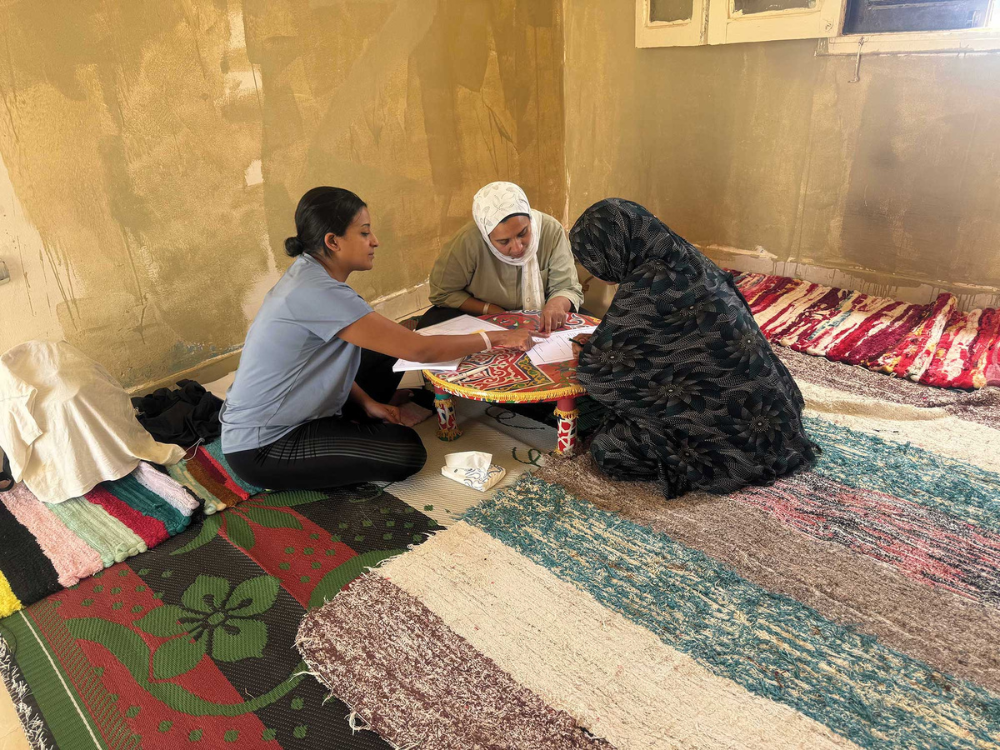
In developing the MERS project, the CARES team worked closely with the community in Hamata and Safaga, partnering with Berenice NGO and the local protectorate. “This partnership ensures the long-term sustainability, durability and feasibility of the project,” said Nadine Gomaa, MERS project officer.
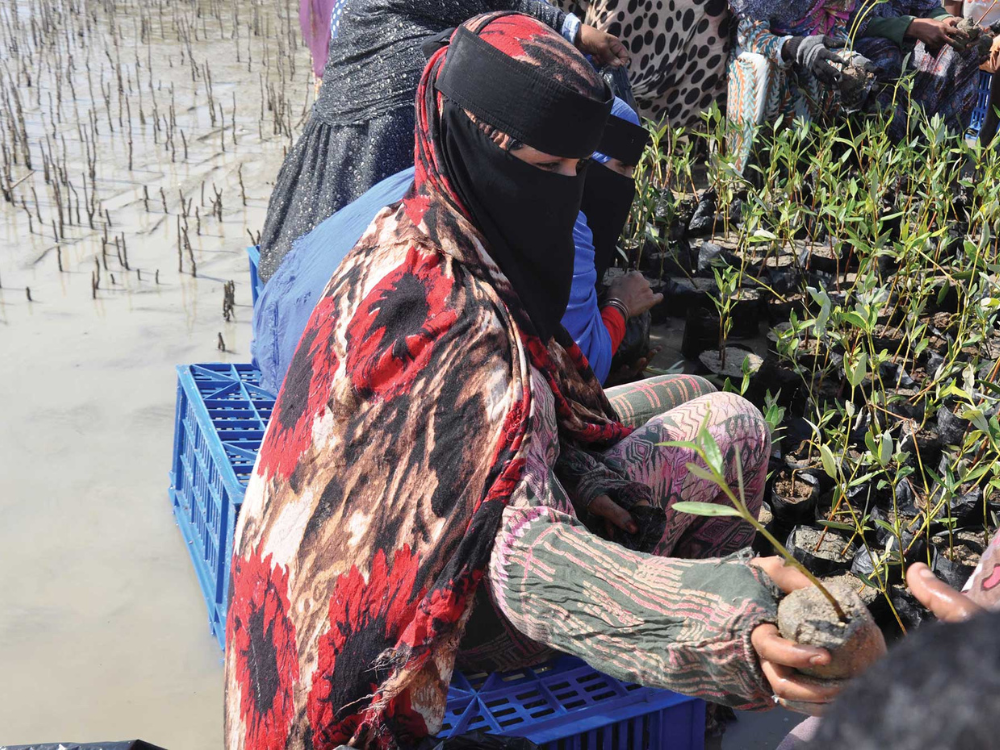
In collaboration with HSBC as part of the Climate Solutions Partnership with the World Resources Institute and the World Wildlife Fund, the CARES team have made many trips to the South Red Sea to replant the mangrove forests. The team focused on planting the mangroves while actively engaging community members.
“We immerse community members in the planting process as much as possible,” said Fahad Kimera, adjunct faculty and senior manager of agriculture. “It’s a sustainability factor, if you look at it in the long term, because people have a sense of ownership that this is something they created and have to keep.”
Empowerment as Sustainability
Ecotourism is one facet that MERS promotes, assisting the community in setting up ecocamp infrastructure. By building the community’s capacity for tourism, the MERS team is positioning mangroves at the center of community life. Due to their rarity and the uniqueness of their ecosystems, mangrove forests are ripe with the potential to become an ecotourism hub. “Mangrove ecosystems themselves are very interesting for tourism because of bird- and marine-life watching, opportunities for boat tours, and more,” Kimera said. Gomaa added, “Ecotourism gives the community incentive to take care of the mangroves.”
The MERS team is also helping to develop an entirely women-led artisanal mangrove honey business. Mangrove honey is a delicacy that the community can use for economic empowerment. “Unlike camels, which degrade the mangroves, having bees around helps with pollination and keeps them healthy. It’s a transition from unsustainable to sustainable livelihoods,” said Kimera.
Education Far and Wide
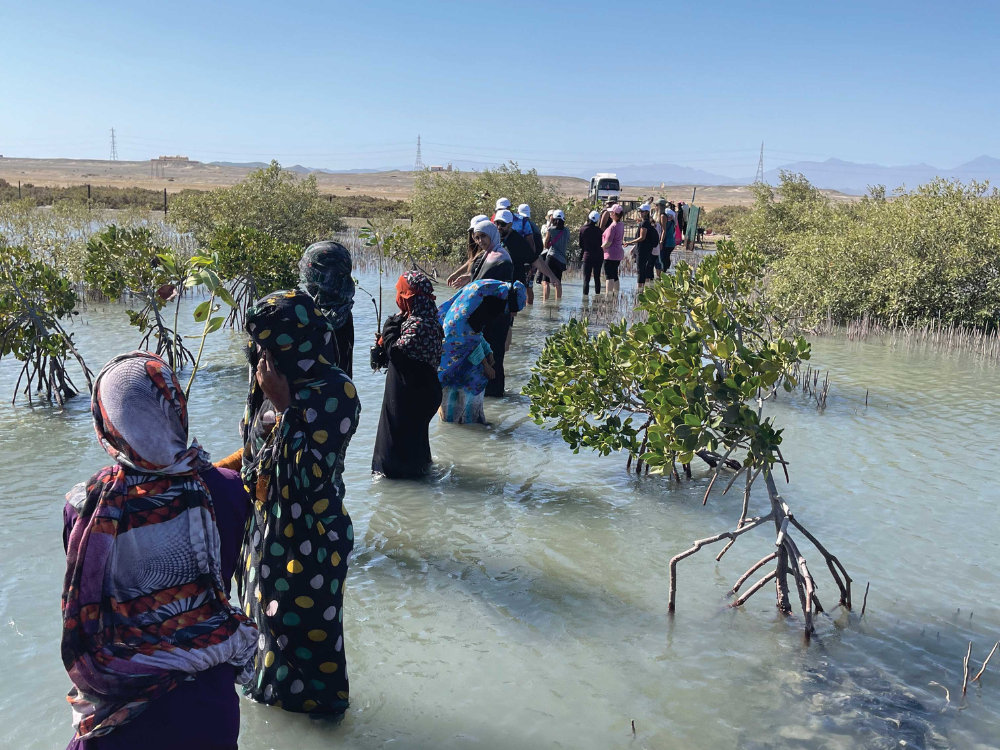
During a planting session, a little girl asked Gomaa why they were planting mangroves. One of the women participating explained that mangroves help address climate change by absorbing carbon and improving air quality. “Attitudes are changing, and I’ve seen it firsthand,” Gomaa said proudly.
A community that knows about the power of the mangrove forest is a community that strives to protect it. “Many of the locals now understand the importance of mangroves for fighting climate change and are aware of how this directly impacts their livelihood,” said Gomaa.
Alongside fieldwork, CARES researchers published open-access studies to ensure scientific findings reached both policymakers and local communities. To further disseminate the knowledge gained from the MERS project, the team has created a Geographic Information System (GIS) platform to map the mangroves along the Red Sea coastline. “This is the first national GIS system mapping mangroves in Egypt,” Gomaa stated.
Further education initiatives include the World Mangrove Day webinar and the Red Sea Youth Change Makers Bootcamp for Entrepreneurs, as well as exhibitions at COP27 and Cairo Water Week.
Helping the World
The collective effort to restore the mangroves demonstrates how local action could inspire a global sense of responsibility. “Reconnecting people with their land and the importance of nature itself is how we can find ways to live in harmony,” Gomaa said. “Climate change is cross-national. We are all members of this community and have a role to play in giving back, whether or not we live in the Red Sea.”
While the MERS project is set to conclude in December 2026 — after successfully planting 50,000 mangrove seedlings — the infrastructure the CARES team has established will continue long after planting. “Our work isn’t going away,” Kimera affirmed. “We have a huge dream of becoming pioneers for mangrove restoration in Egypt. Looking into the next 25 years, I think we would have a significant impact on the mangrove ecosystems in Egypt. The community benefits. The world benefits. It’s as simple as a seed.”
All photos courtesy of CARES