

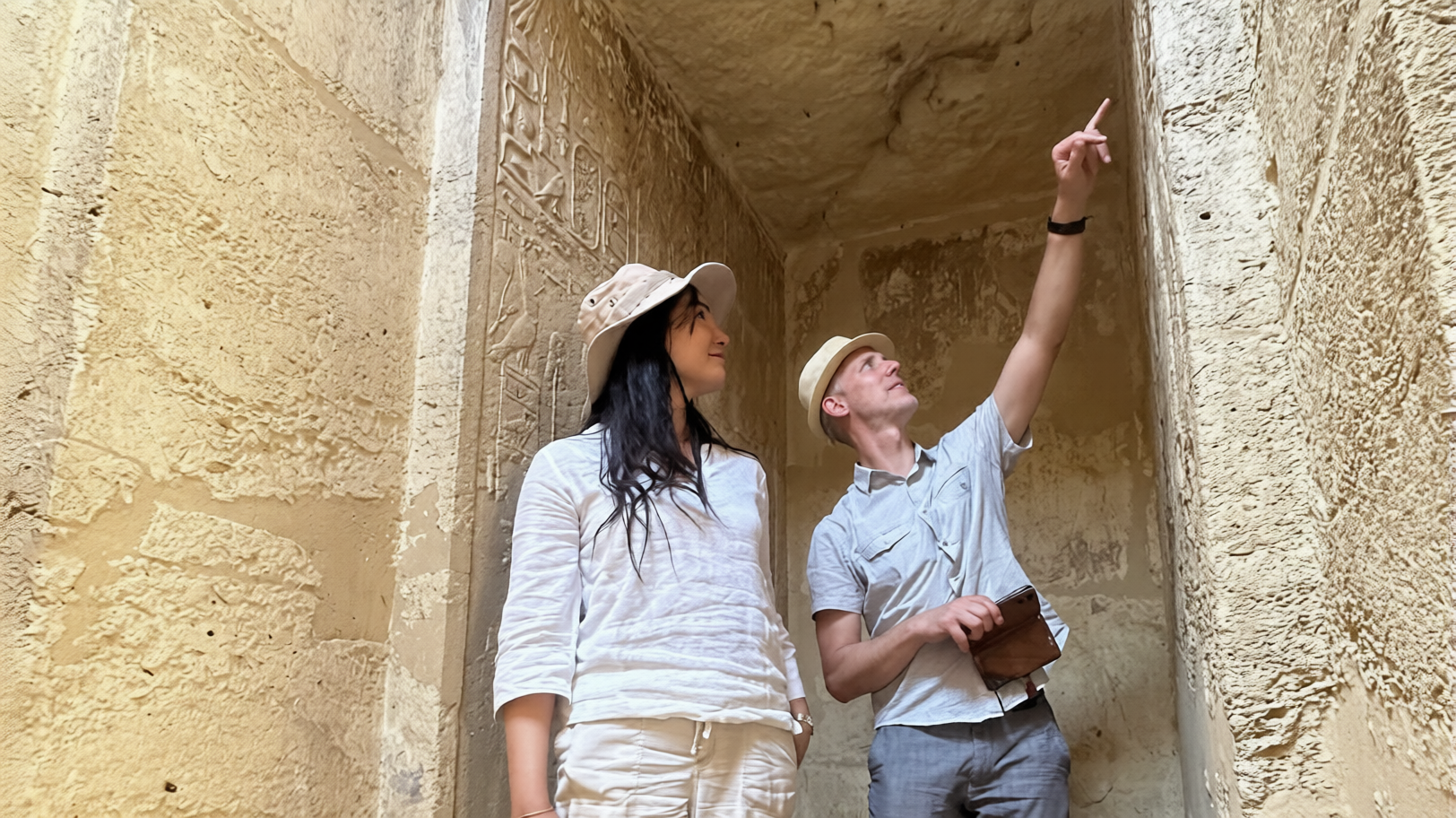
A field trip to Fayoum helped students connect classroom learning with lived experience in one of Egypt’s richest historical settings
Oases have always brought life: from ancient agriculture to modern-day buses carrying eager students across the desert. More than a popular weekend destination, the Fayoum Oasis is a record of Egypt’s rich history, where prehistoric, ancient civilization and contemporary life exist in parallel.
Undergraduate and graduate students in the Art and Architecture of Ancient Egypt course — taught by Distinguished University Professor and Amelia Peabody Endowed Professor of Egyptology Salima Ikram (YAB ’86) and Henning Franzmeier, the William K. Simpson and Marilyn M. Simpson Visiting Professor in Egyptology for Spring 2026 — explored history up close during an overnight field trip to Fayoum. Visiting sites across the oasis, they saw how the natural landscape shaped thousands of years of Egyptian history.
“On-site learning makes the subjects come alive,” Ikram stated. “As we walk along a processional route, students start to understand the role and power of religion in ancient Egyptian society and culture.”
Millennia in One Oasis
Few places in Egypt capture as many layers of history as Fayoum. Once covered by an ancient sea, the oasis later became a vital agricultural center for the pharaohs, Ptolemies and Romans. Today, its fertile fields surround temples, settlements and agricultural remains spanning thousands of years, making it an unparalleled classroom for students of Egypt’s past.
Fayoum offered the rare opportunity for students to move through those layers of history in a single trip. Traveling from Karanis to Qasr El Sagha, each stop revealed how the landscape shaped daily life, religion and political power across different civilizations.
“On-site learning makes the subjects come alive. As we walk along a processional route, students start to understand the role and power of religion in ancient Egyptian society and culture.”
“There were so many beautiful temples that blended into the area. My favorite thing I got to see was Medinet Madi,” said Jena Baitelmal, biology sophomore. “It had the ruins of a small town with a temple to Sobek, the crocodile god. The engravings were lovely, and it was cool to see how it mixed with Greek-style additions, like lions and Greek sphinxes.”
For Khalil Hernandez, an American study-abroad student, the experience underscored how the oasis, despite its seemingly remote location, was deeply connected to regional trade and empires.
“Being in Fayoum, I was really able to understand the role that Egypt played in supporting the agricultural industry of the Roman Empire,” he said.
From the fossilized mangroves in Wadi Al-Hitan to the Ptolemaic temple of Qasr Qarun, students took in the expanse of the oasis through multiple disciplinary lenses. Whether examining geological preservation, artistic traditions or political symbolism, each stop offered a different way of understanding Egypt’s past.
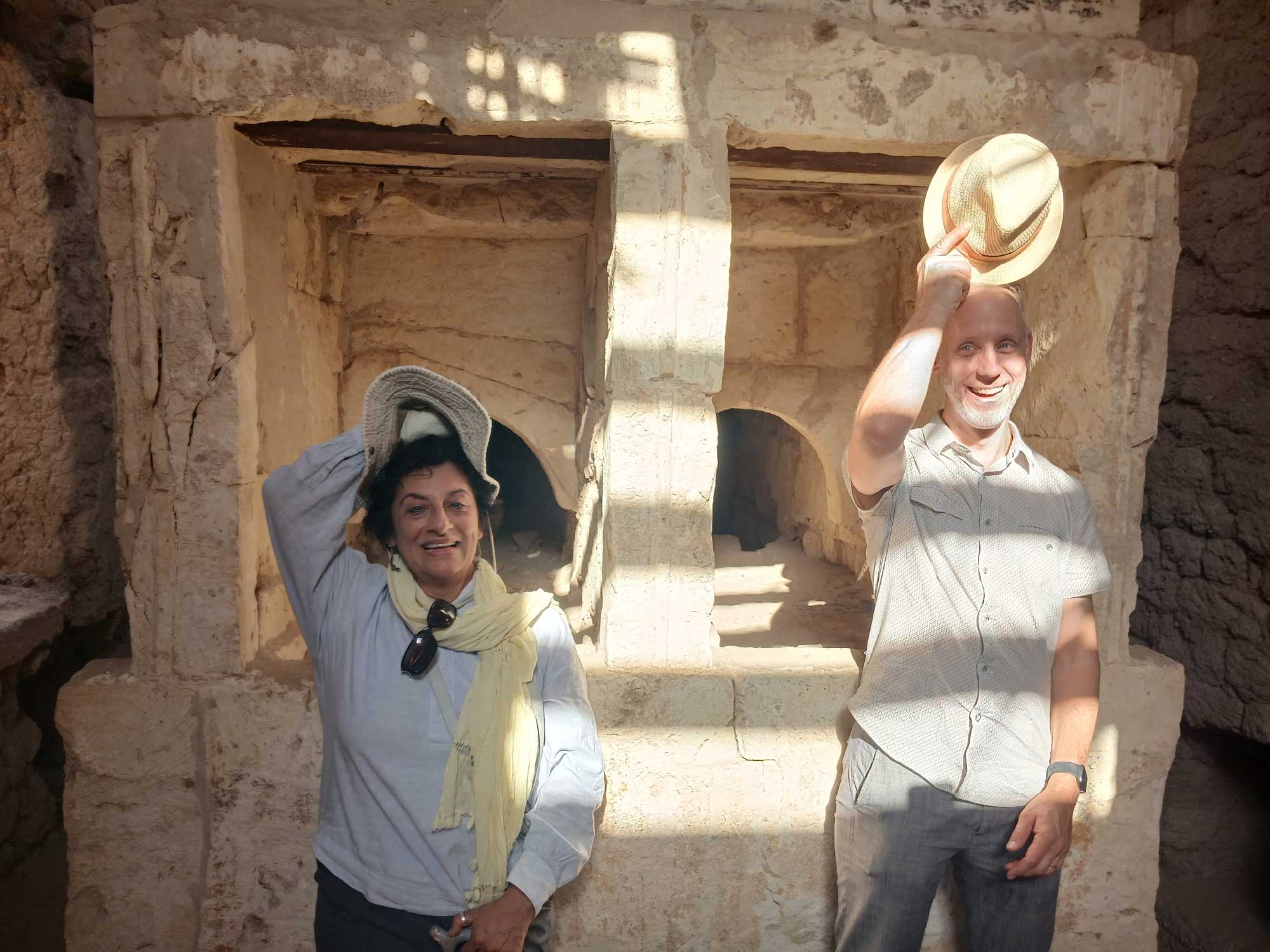
“Everything is more real, and these experiences provide a more profound understanding of the past and its significance to the present,” said Ikram. “The remoteness of the basalt quarries emphasizes the extraordinary perseverance and genius of the ancient Egyptians who cut and moved huge rocks from this distant place to the pyramids. The town of Karanis allows people to wander through houses, look at spaces for food preparation, visit bathhouses and really see how people lived,” said Ikram.
“It’s one thing to read about it, but another to experience it and imagine its greatness. I hope that with these visits, more people will be willing to help preserve these sites and the history and culture they hold.”
History Up Close
The breathtaking expanse of Fayoum’s past comes alive in a way that is impossible to replicate on the pages of a history book. For many students, standing among sites of such significance and natural beauty was nothing like what they had previously encountered in lectures and textbooks.
“Field trips are important on a variety of levels,” Ikram explained. “I want students to engage with monuments in their landscape to better understand the context and to see how the environment, as it changes, dictates responsive changes in human behavior. In addition, people see more of Egypt, which is valuable. And finally, it is also a bonding experience for the students and a way for personal growth.”
Traveling as a cohort and staying overnight in the Tunis village allowed the students to become more than just colleagues; they also became friends. “These trips are a great way to get closer to classmates,” shared Emily Martinez, Egyptology master’s student and class teaching assistant. “Seeing all these historical sites in person is especially impactful as a class cohort.”
Baitelmal affirmed, “The trip really helped me better understand these sites and get a more in-depth explanation of what they mean. I had been to some of the places in Fayoum before, but I had never really understood many of the sites until I went on the trip.”
Martinez hopes the experience inspires students to see Egypt’s heritage in a new light and recognize its importance. “It’s one thing to read about it, but another to experience it and imagine its greatness. I hope that with these visits, more people will be willing to help preserve these sites and the history and culture they hold,” she said.