

"I love cooking, and I love being in the kitchen," says Iman Afify (MA '22), doctoral research fellow at the University of Oslo's Department of Culture, Religion, Asian and Middle Eastern Studies. "It's a love language of mine to feed people."
Nowadays, Afify and many others have found themselves having to adjust their shopping lists as persistent inflation and economic pressures tighten budgets around the world.
"I have to be thriftier now and rely on pre-cooked meals," she says. "I try to add a personal touch like spices when I have people over, but it's not the same."
According to Afify, food is a great entry point for understanding Egyptian society, which is why she chose to explore its deeper social and cultural meanings in her master's thesis at AUC titled, "Navigating the Cairene Table: Food and Family between What Is Ideal and What Is Real."
"Food has always been my own gate to the past and present," she says.
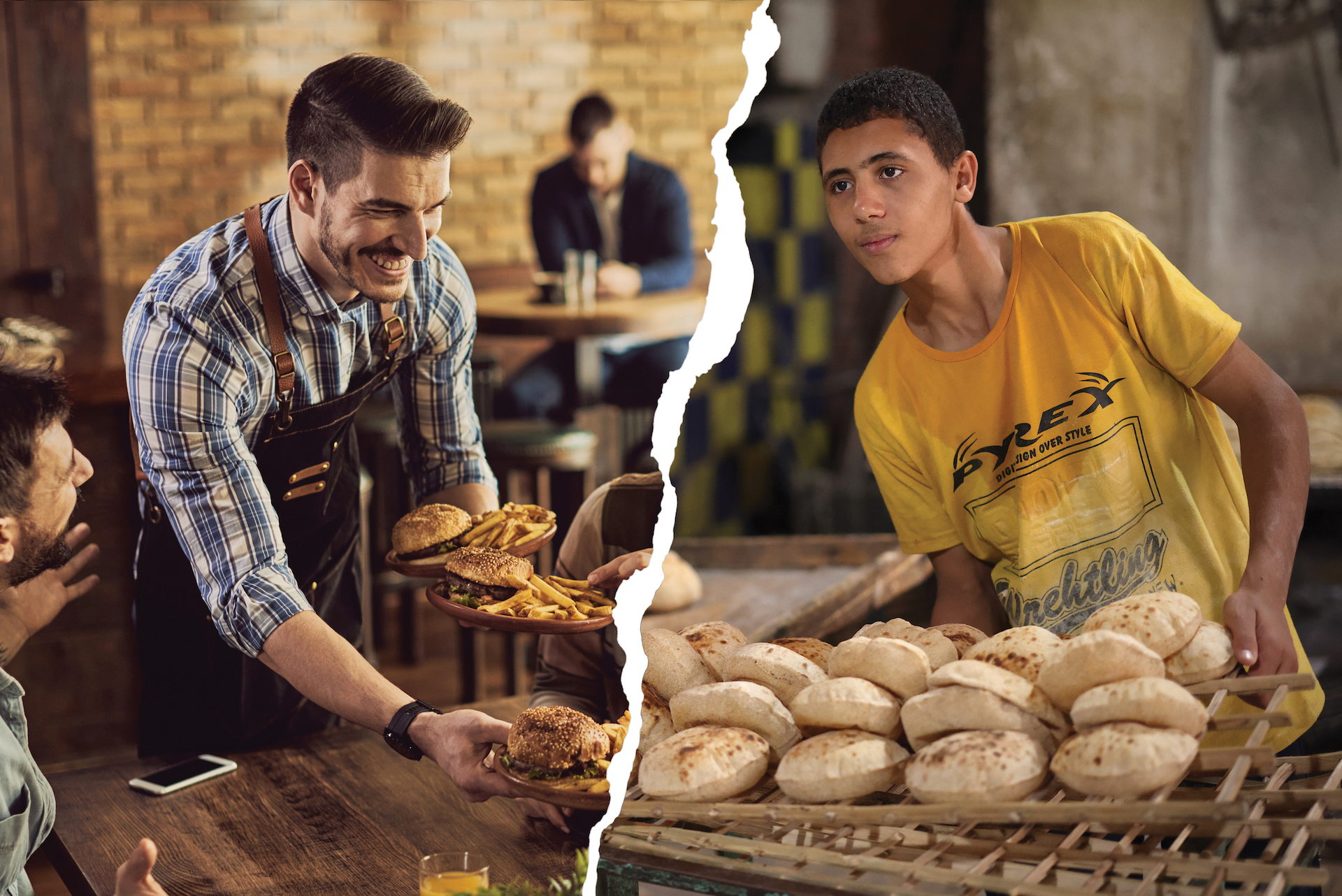
Today, as Egypt remains gripped by long-standing inflation and rising prices at the supermarket, food is now emblematic of the economic struggles the country faces, along with growing wealth inequality.
In 2023, the World Bank reported inflation in Egypt was at 33.9% -- the highest it had been in five years. This spike was partially fueled by the war between Russia and Ukraine, countries Egypt relies on for wheat exports.
After the pound was floated in 2024, there has been a slight reprieve. According to data from Egypt's Central Agency for Public Mobilization and Statistics, inflation has gone down to 24% as of January 2025, when the pound was trading at around EGP 50 against the dollar.
But the higher prices seem to have dug in their heels at the market. For example, while inflation in Egypt fell overall from 2024 to 2025, food inflation rose slightly, from 20.3 to 20.8%.
According to Ahmed Elsayed, associate professor of economics at the Onsi Sawiris School of Business and executive director of the Abdul Latif Jameel Poverty Action Lab (J-PAL) MENA at AUC, some staple grocery items have seen prices more than double since 2018. This includes protein sources like chicken, beef, fish, eggs, lentils and milk -- key ingredients in many dishes.
Elsayed also says that food prices are a significant indicator of inflation in Egypt, making up around 40% of the Consumer Price Index basket, a primary measure used to track inflation and cost of living. "Food makes up such a large percentage because it's so important in a household budget, especially for lower-income families," he says.
However, food prices alone don't make up the whole picture of inflation because they can also be quite volatile. Unlike other commodities, food prices change season to season, and their cost can be impacted heavily by supply chain disruptions and global price shifts.
"Factors like climate change and water scarcity, along with inefficient agricultural practices, can also impact domestic food production and drive up cost," Elsayed notes.
Still, the food market is where most people confront higher prices, and the rising costs have a disproportionate impact on poorer Egyptians. Elsayed referenced data revealing that among the poorest 20% of Egypt's population, 42% experience anxiety about food supply. Meanwhile, only 15% of people among the country's richest 20% report similar stressors.
"Children in poorer households are particularly affected, with rates of impaired growth highest among the poorest quintile," he said. "This indicates that socioeconomic status significantly influences child nutrition and growth."
Feeling the Pinch
During her master's thesis work in 2021, Afify saw these types of class differences. In one wealthier household, she observed that the mother had two grocery lists: one with imported goods for the family to eat and another with staples -- sugar, tomato cans, pasta packages, rice and oil -- for the people who worked for them to use. "For the workers, it was just sustenance -- nothing luxurious about it," she notes.
Afify also went to a hypermarket one day before Ramadan, comparing the experience shopping there to a local market in Abbasiya during the holy month. "At the hypermarket, I saw people buying 8 kilograms of meat and 30 cans of tomato paste, and I thought, 'Who are you feeding?'" she laughs.
At the local market, she noticed that the atmosphere was different. People shopped during Ramadan the same way they shopped the rest of the year -- looking for good deals but not buying in bulk.
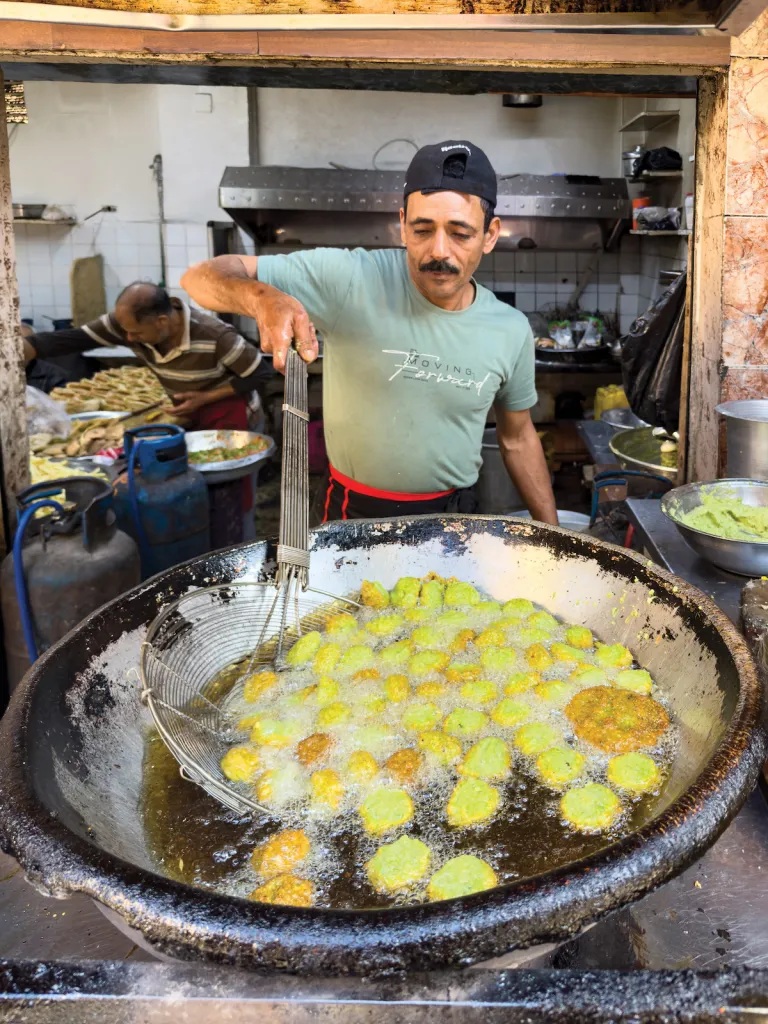
Still, with inflation so high, everyone -- not just the poorest Egyptians -- is feeling the pinch. A 2022 survey by the International Food Policy Research Institute found that 85% of Egyptian households decreased their meat consumption due to price increases, along with adopting other coping methods such as reducing meal sizes and consuming more cheap foods.
Afify also saw these shopping changes reflected in her research. "When I observed the grocery stores back in 2020, people were buying quantities of meat to sustain them for the whole month of Ramadan. People still tend to forget their economic problems when it comes to Ramadan, but they don't have that luxury now," she says.
Afify estimates that meat prices are currently double what they were when she conducted her thesis study. And these high prices have impacted her as well.
"I used to spend EGP 1,500 for groceries that would last me two to three weeks," she says. "Now, that same amount might only get me three kilos of beef."
Beyond Quick Fixes
Are there any solutions on the horizon? In addition to raising interest rates and floating the pound, the Egyptian government increased the monthly minimum wage to EGP 7,000 per month as of February 2025.
Still, Elsayed says that addressing these price issues requires a comprehensive approach, including "improved agricultural practices and targeted policy interventions," along with larger social protection programs.
"The Takaful and Karama programs support around 22 million individuals, yet this still leaves about 8 million people living in poverty without adequate assistance," he says, pointing out that minimum-wage workers are not eligible for these additional aid programs. "Even those just above the poverty threshold are at risk of falling into poverty as inflation erodes purchasing power, making it increasingly difficult for middle-income families to maintain their standard of living."
But Elsayed believes there is hope for improvement, especially through technological advancements like flood-resistant crops and rainwater harvesting. "Investment in preventative measures, including robust social safety nets and climate-resilient infrastructure, is crucial to mitigate future shocks," he notes.
Evidence from J-PAL MENA also emphasizes the benefits that come from making social protection programs like Takaful and Karama more accessible or expanding government programs like Bab Amal (Door of Hope), an intervention designed to help the most vulnerable in Egypt out of poverty. Bab Amal works by providing participants with assets like livestock along with vocational training, temporary cash support and basic healthcare.
Elsayed notes that other countries also offer interesting models. J-PAL looked at research and evidence from countries like Ecuador, Mexico, Kenya and Indonesia that show how cash transfers can improve livelihoods without discouraging work and how food vouchers can spur more diverse diets.
At the end of the day, for young people like Afify, the higher prices are still very present. "I used to go shopping for groceries as an act of leisure," she says. "I don't do that anymore because I'm worried that if I spend too much, I won't be able to spend it later on essentials."
-By Claire Davenport
What Is J-PAL?
The Abdul Latif Jameel Poverty Action Lab (J-PAL) was founded at the Massachusetts Institute of Technology (MIT) in 2003 to fight global poverty through evidence-based policymaking. Conducting more than 1,000 randomized evaluations worldwide, J-PAL tests what works in social programs, translating research into actionable insights for governments, NGOs and donors.
J-PAL MENA, based at AUC's Onsi Sawiris School of Business, connects researchers and local partners to design and scale effective programs, as well as train policymakers and practitioners through executive courses and online learning.