

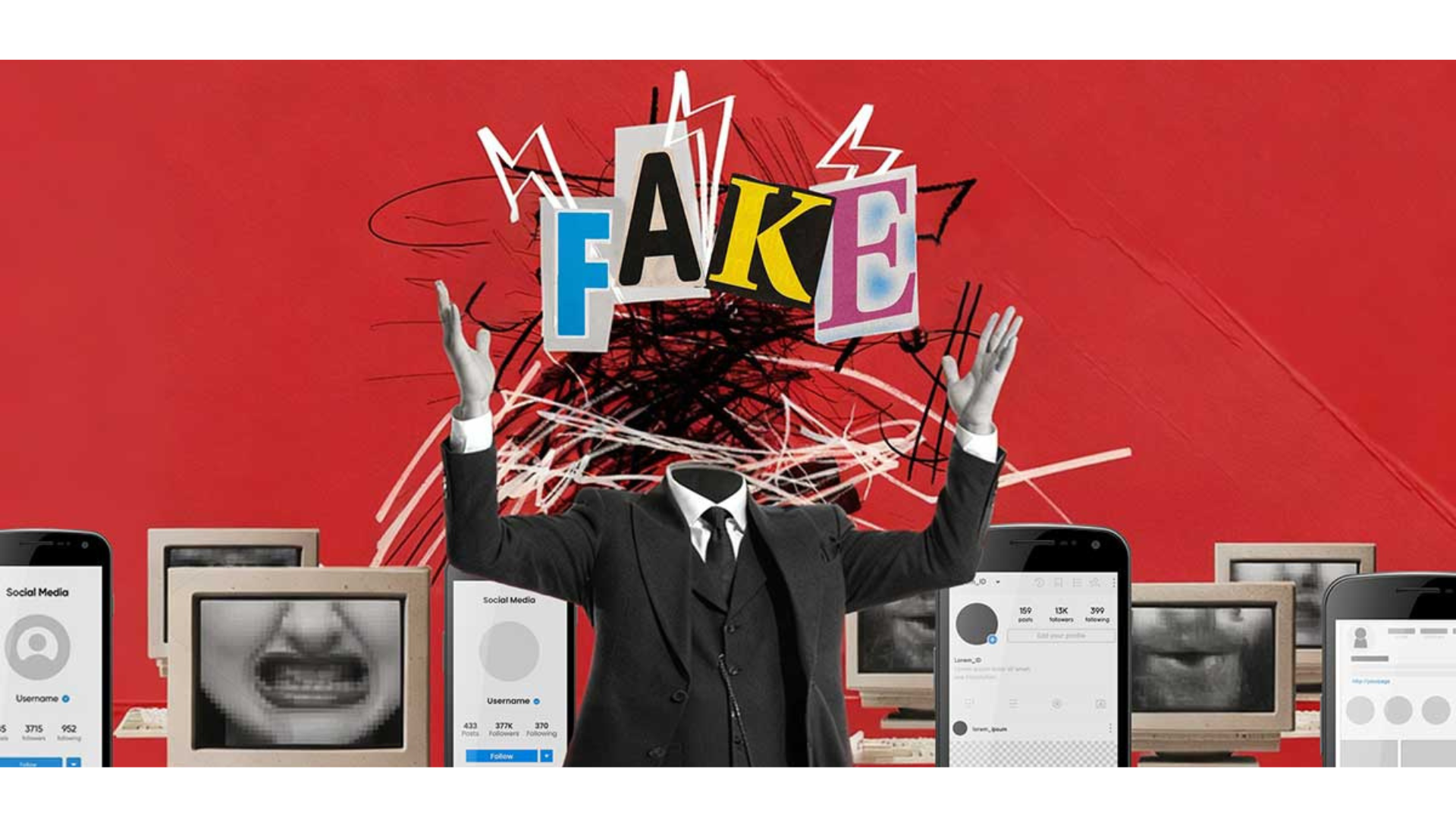
Seeing is no longer the same as believing. With the rise of major social media platforms in the mid-to-late 2000s, social media has gradually become a key source of news for many people. Within this ecosystem, consumption has shifted toward superficial skimming of headlines rather than deep engagement. A 2016 study found that 60% of links to Washington Post articles shared on social media were never opened. Users often share headlines because they either confirm existing beliefs or feel provoked, without necessarily reading the article.
With social media becoming a main source of news for many as well as an influx of AI-generated videos and deep fakes deployed on social media — by entertainers, fraudsters and political actors alike — consumers struggle to distinguish between authenticity and illusion. Khaled Ezzelarab, associate professor of practice in the Department of Journalism and Mass Communication and director of AUC’s Middle East studies program, believes that this phenomenon is further weakening public trust in the media ecosystem as the lines between information and misinformation become increasingly blurred. AUCToday spoke with Ezzelarab to learn more.
Media literacy is not just about teaching practical skills. It is also about how information is produced, shaped and circulated, especially in an environment increasingly affected by AI
What effect does the rise of social media and AI-generated content have on journalism?
In terms of production, the social media ecosystem favors virality, speed and volume, and that has reshaped journalism. Egyptian news outlets are now largely driven by what is trending online, which influences not only whether a story is covered but how it is told.
Instead of producing one comprehensive narrative, journalists are often required to publish multiple updates — announcements, reactions and follow-ups — because platforms reward constant output. In many cases, this has led to lower-quality reporting driven by platform logic rather than editorial judgment.
What are the advantages and disadvantages of this shift?
One advantage is that social media has challenged dominant narratives. Many people, especially the younger audiences, now consume major events primarily through social media. For example, the war in Gaza has been widely circulated through social media, contributing to a noticeable shift in how Western audiences engaged with this issue. This has made it possible for the public to witness events that might otherwise go unseen, as anyone with a smartphone can act as a citizen journalist.
On the flip side, the spread of misinformation — false information shared unintentionally — and disinformation — deliberately misleading content — has accelerated. The idea that social media is a completely open space is not entirely accurate because platforms and governments impose significant restrictions, shaping what can and cannot circulate.
Why does misinformation spread so quickly in times of crisis?
In moments of political conflict, natural disasters or uncertainty, audiences actively look for information to make sense of unfolding events. Algorithms respond by amplifying “news” content — including misinformation and disinformation — because they are designed to maximize engagement. Emotional responses also play a key role. Fear, anger and uncertainty make audiences more reactive, and platforms prioritize content that triggers those responses — accelerating the spread of misleading information.
“It has become easy to produce convincing AI-generated videos, making it harder to distinguish between what is real and what is fake.”
How are AI and deep fakes reshaping media credibility, and how should the audience respond?
It has become easy to produce convincing AI-generated videos, making it harder to distinguish between what is real and what is fake. Personally, I have stopped watching videos on social media feeds altogether because there isn’t a reliable way to verify them.
Ironically, this may mark a tipping point. As misinformation becomes more widespread, audiences may begin returning to traditional forms of journalism, where a verification process is more established. At the same time, no single source is sufficient. Audiences must rely on several outlets, as navigating this landscape requires a more critical approach to media consumption.
What role should higher education play in improving media literacy?
Universities have a different role from news organizations. While newsrooms are focused on daily reporting, universities can and should function as spaces for reflection, research and critical engagement with media systems.
Media literacy is not just about teaching practical skills. It is also about how information is produced, shaped and circulated, especially in an environment increasingly affected by AI. At AUC, for example, education extends beyond the classroom through courses on media literacy, alongside other initiatives like inviting guest lectures and engagement with media professionals. These spaces allow students to move beyond consumption only and begin questioning how media systems operate.