

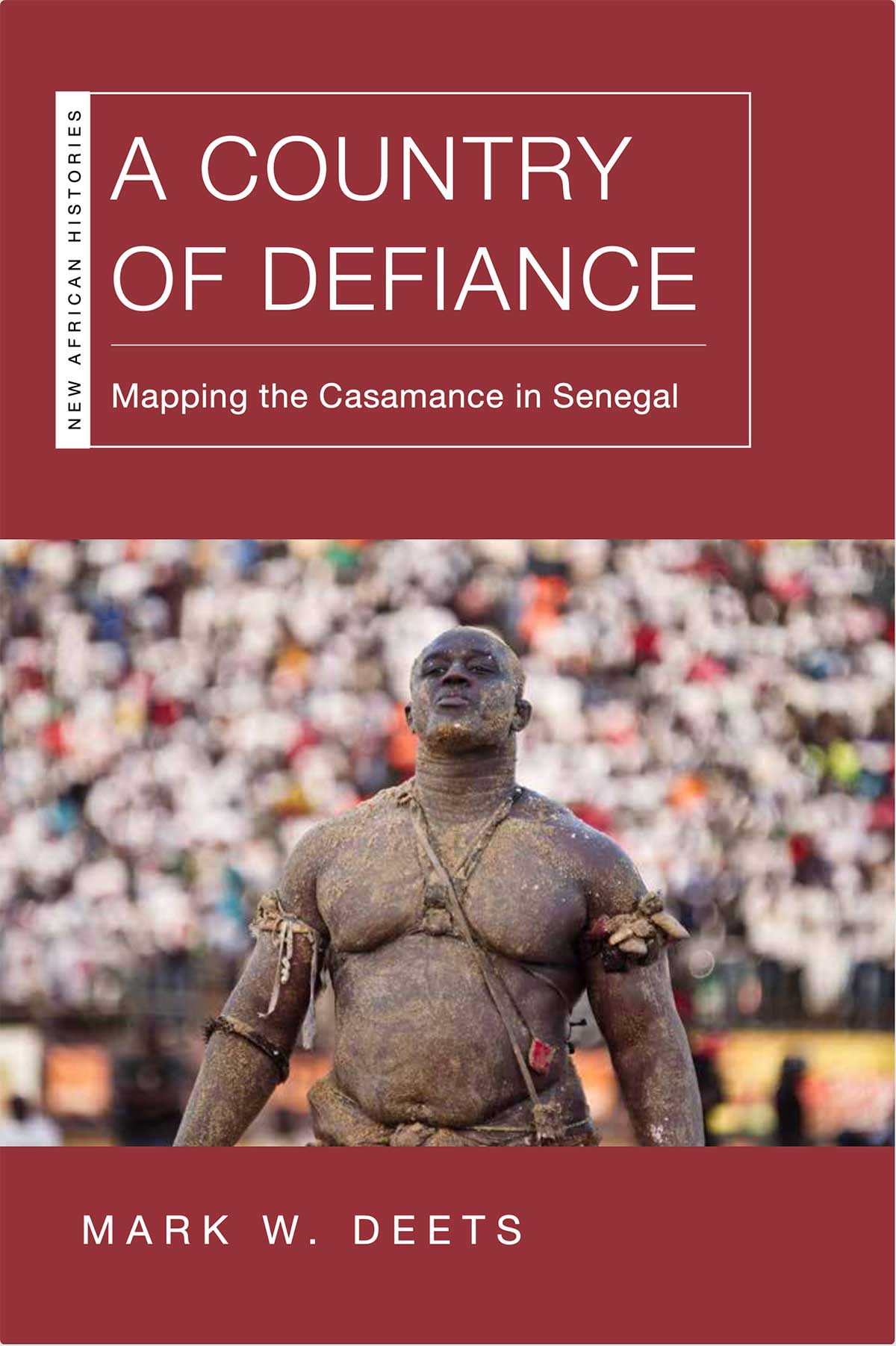
From the plains of Kansas to the lush river deltas of southern Senegal, Mark Deets, assistant professor of African and world history in the Sultan Al-Qasimi Department of History and director of the Prince Alwaleed Bin Talal Bin Abdulaziz Alsaud Center for American Studies and Research, seeks to understand how history and geography inform politics. A naval pilot turned historian, Deets has a rich diplomatic background that has helped him uncover the spatial history of West Africa, culminating in his debut award-winning book, A Country of Defiance: Mapping the Casamance in Senegal.

“Looking at these cases of federalism and separatism can be instructive — what they mean for both the past and the future.”
From experiencing a coup on the first day of a diplomatic visit to Mauritania to meeting rebel representatives a month after a peace treaty was signed, living and working in the Sahel gave Deets a unique firsthand perspective on borders and conflict. His research into separatist and federalist movements reveals the discord caused by colonial borders and the lessons history offers for the future of African border governance.
Dissecting Separatist Movements
The time Deets spent in West Africa marked a significant shift from his upbringing in small-town middle America. He joined the U.S. military, serving as a naval helicopter pilot before being stationed at the American embassy in Dakar from 2005 to 2007. As a military attaché, Deets saw firsthand the influence of U.S. interventionist policy in the region and the importance of informed historiography for effective policymaking. Driven by questions about how colonial legacies, ethnicity and border politics continue to influence political and military action, Deets went on to pursue a PhD in history at Cornell. It was during his doctoral research that he fully dissected his experience in Senegal and returned to unpack the rich history of the Casamance.
"The conflict in the Casamance is a spatial discourse of grievances. Issues of colonial borders, identity and resources — both natural and human — remain with us today in the Casamance and beyond.”
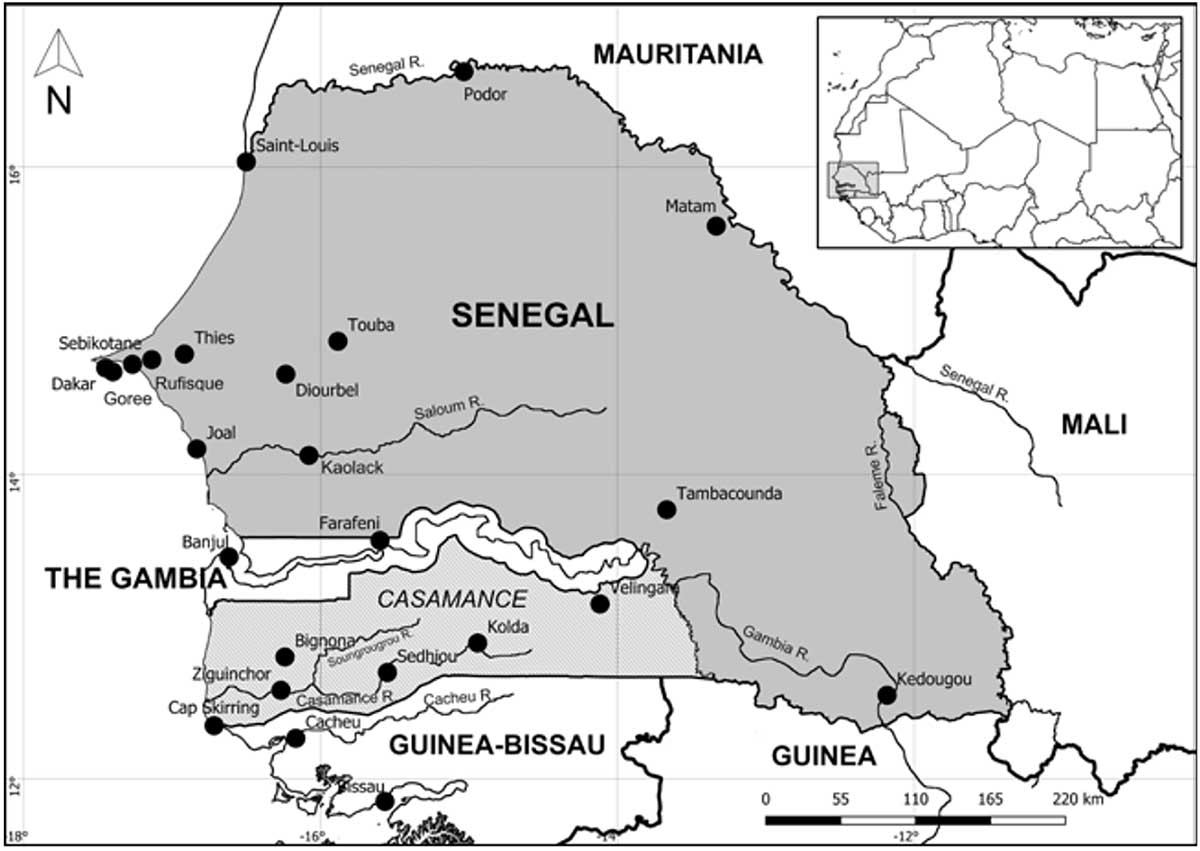
A Country of Defiance: Mapping the Casamance in Senegal draws on his diplomatic experience in Senegal. The book won the Outstanding First Book Prize from the Association for the Study of the Worldwide African Diaspora. “The Casamance endlessly fascinated me,” Deets shared. Located in southern Senegal below The Gambia, the Casamance hosts a separatist movement led mainly by members of the Jola ethnic group. “Why would they want to separate from Senegal and lose the stability and power that comes from that? This was my driving question.”
Deets spent years speaking with locals involved in the Casamance separatist movement and Senegalese officials, uncovering the roots of decades-long low-intensity conflict in the region. “C’est un pays de refus is what I was told,” Deets shared. “A country of defiance.”
Through his book, Deets explored how religion, ethnicity and geospatiality — the relationship between space and social division — created seemingly stark divides in the Casamance. The book is structured around landscapes and built spaces, examining places such as the river, the rice field, the forest, the school and the soccer field. Each site shapes how the separatist movement developed and deepened divides between people in the Casamance and those outside it. “The conflict in the Casamance is a spatial discourse of grievances,” he shared. “Issues of colonial borders, identity and resources — both natural and human — remain with us today in the Casamance and beyond.”
Senegal has been influenced by French, Portuguese and English colonial powers that arbitrarily lumped ethnic groups together within borders and divided others across states. There are at least 20 distinct ethnic groups in Senegal, many of which have kin in neighboring Gambia, Mauritania, Mali and Guinea-Bissau. While some groups have tried to break off into their own states, as in the Casamance, others have attempted to reunify.
Discovering Federalist Movements
In his next project, Deets turns to the Senegambian Confederation, a loose federation between Senegal and The Gambia that existed from 1982 to 1989.
"As the next generation of leaders in West Africa lean further away from colonial links, there is room to return to these questions of federalism."
An English-speaking nation colonized by the British and centered on the Gambia River, The Gambia is entirely surrounded by Senegal. This unusual geography is a product of colonial border-making, with the British seeking control of the river as a means of trade and transportation. Today, more than 60 years after independence, this colonial geography still creates obstacles. “The lock-and-key geography complicates travel and trade,” Deets said. “It has been described by Senegalese officers as ‘the Gambian finger poking us in the side.’”
Beyond geographical constraints, Deets also traces how these borders continue to shape regional politics and scholarship.
“With my book on the Casamance, I began reading more about the colonial border legacy in the region, which brought me to Senegambia,” Deets explained. “This confederation was an attempt to overcome that legacy and shows just how difficult it is to do so.”
Building on this work, Deets examines the history of the federation and where its weak points emerged. Regional conflict and economic difficulties complicated integration between the two nations. “I’m analyzing the social diplomatic history of Senegambia — how ordinary people were affected, how they were not affected, and how they influenced diplomats and politicians. Ordinary people did have influence on the confederation’s future and its eventual demise,” he reflected.
Deets plans to expand this bottom-up approach by delving into archives, interviewing those involved and returning to contacts from his research on the Casamance. Recording this history is time-sensitive, as 40 years have passed since it started and those who witnessed it are becoming fewer by the day. The Senegambian Confederation is especially important, as it is part of the broader history of attempts to overcome colonial borders through Pan-Africanism. While Senegambia only lasted for seven years, its lessons may endure long into the future.
“As the next generation of leaders in West Africa lean further away from colonial links, there is room to return to these questions of federalism,” Deets shared.
Colonial legacies in West Africa are weakening, with the new generation of elites having fewer ties to France than ever before. “I think it might be worth reopening that conversation in ways that look to Africa's future, not its past.”