

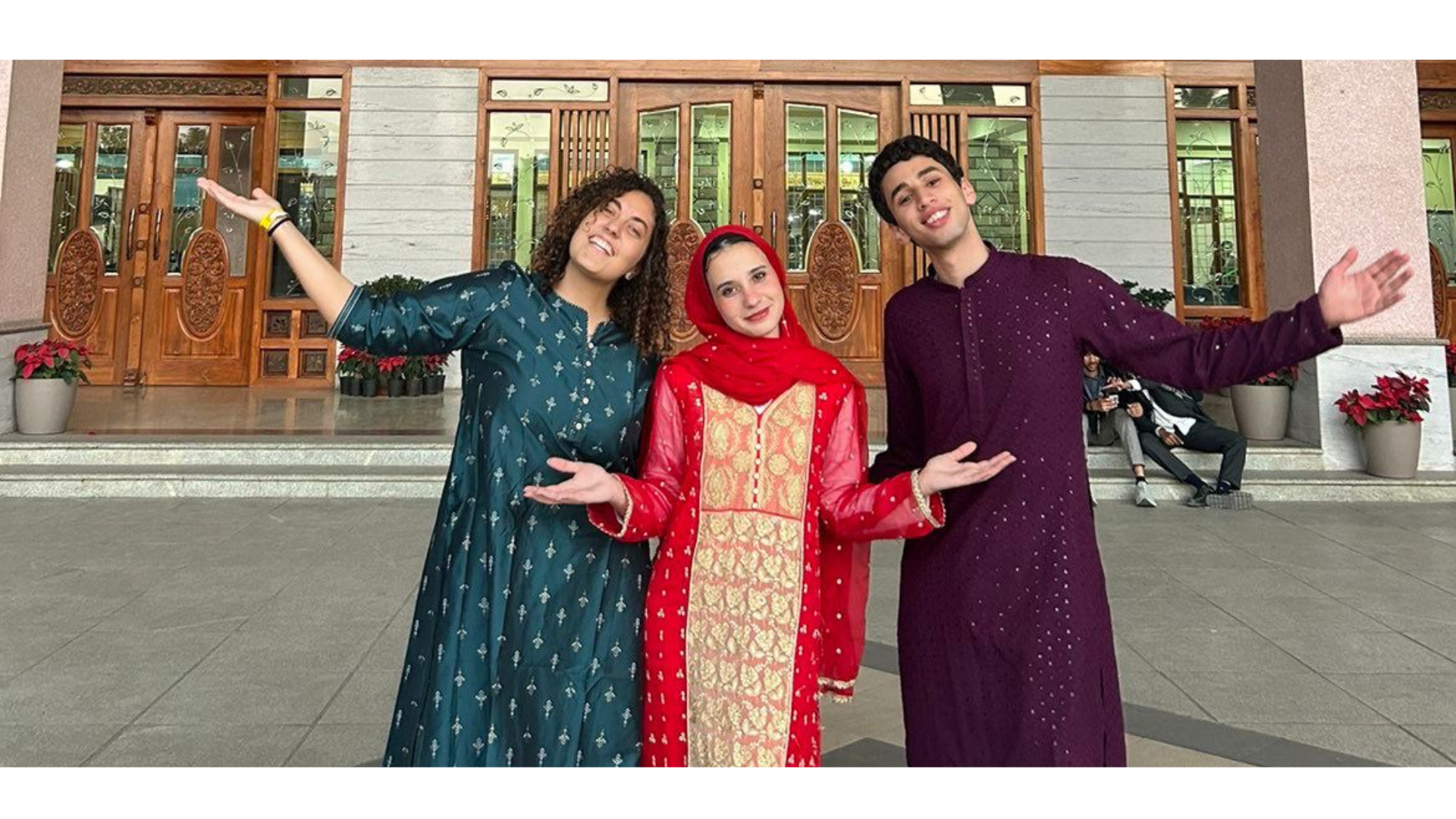
Vibrant streets, the loud honking of cars, the smell of delicious food filling the air — are we in Egypt or in India?
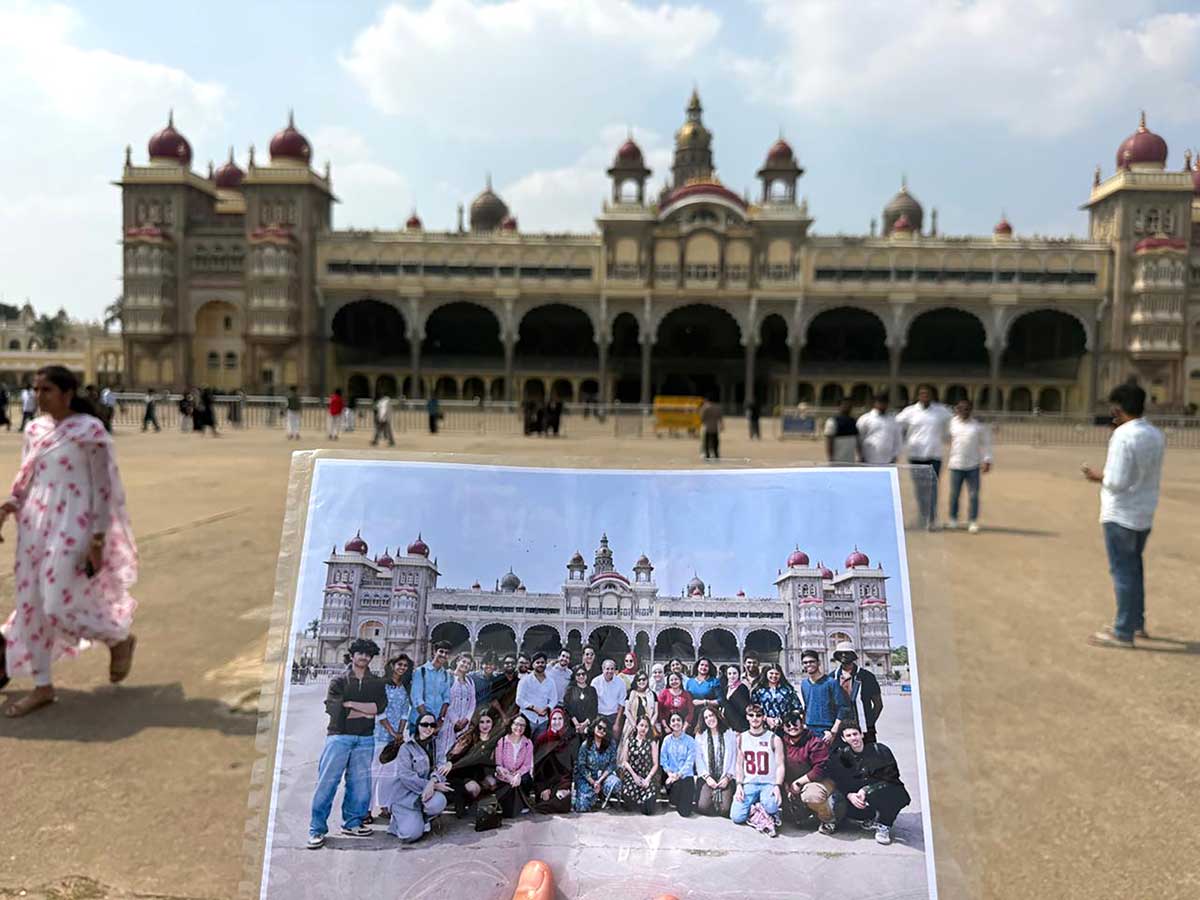
The two countries have more similarities than meet the eye, which AUC students discovered during a winter class trip to Bangalore, India as the second iteration of a partnership between AUC and Christ University for the 2026 Winter School on Inequality and Social Justice.
“India is like Egypt, 2.0,” said Nadine Fenoon, a senior double majoring in political science and journalism and one of the 12 AUC students who traveled to India. “If you dig deep, you find our similarities alongside our differences.”
By comparing their home in the Middle East to their partner university in Asia, students uncovered how institutions across the Global South can support one another, shed neocolonial structures prominent in academia and create pathways to a more self-sustaining future.
Pathways Beyond Neoliberalism
Comparative research between countries in the Global South is a cornerstone of the Pathways Beyond Neoliberalism: Voices from MENA program, a five-year global research initiative at AUC supported by a Ford Foundation grant and linked to partner universities in India, South Africa, Colombia and Mexico. The class was part of the program.
“The idea behind Pathways Beyond Neoliberalism is to become a hub of research for the Global South and address questions on the transformation of the world’s political economy,” explained Amr Adly, associate professor of political science who taught the AUC portion of the course. “Having partnerships in India allows us to expand our network of experts and gives our students valuable perspectives. This is one of the first AUC exchange programs with a genuinely Global South institution.”
Students in the course were encouraged to question prominent development paradigms and critically evaluate topics such as poverty, environmental stress, gendered inequalities and uneven access to services. By taking lived experiences from Egypt and layering them onto academic learning in India, students were able to approach cross-cultural contexts with greater nuance.
“Unlike the Global North, we don’t have much written about the Global South. There is plenty that has been written about India, but it doesn’t do justice to such a complex country. "
“We always see comparisons between North and South, which can be a problem because of the inherent divisions it creates,” said Paul Hahn, a Middle East studies sophomore who went to Bangalore to explore not only his interest in political science but also his own family’s roots in the region. “Even though Egypt and India are so different, it was really easy to talk to the other students and professors about our cultures because there is a lot of mutual understanding.”
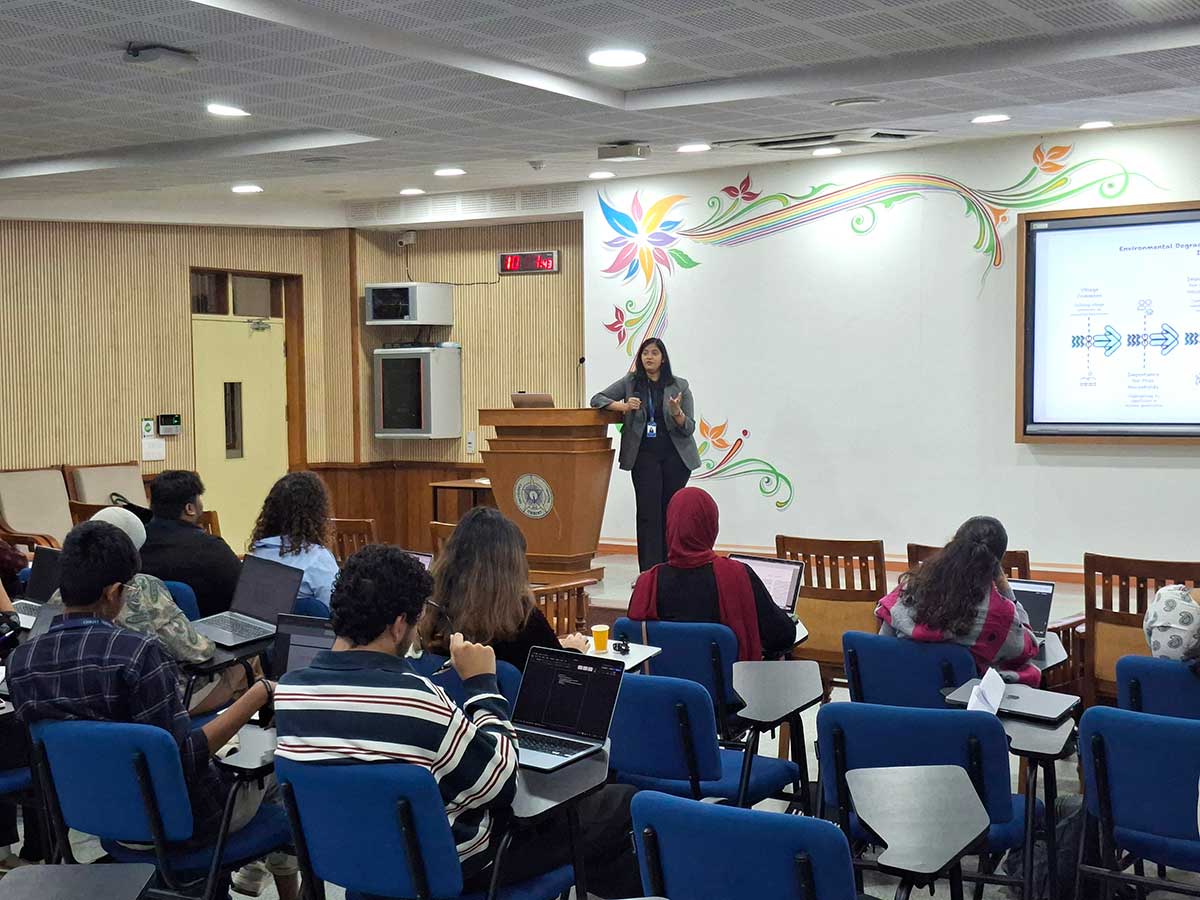
By finding connections between their cultures, students engaged with the material in a hands-on way. They visited NGOs and animal shelters as well as attended lectures alongside Indian students. They also experienced the beauty of Bangalore, from palaces to temples bustling with life and history. Immersed in different aspects of life in India, they were able to connect more deeply with both the material and the surrounding community.
“One of our Indian professors said that the only reason we can connect is due to the shared colonial language, English,” Fenoon explained. “Yet we're both now using this language for our own sake, reaping its benefits, communicating and bringing the Global South perspective into the world.”
More Similar Than Different
Beyond field trips and lectures, AUCians found the connections they made with the Indian students life-changing. “The cultural exchange was the most impactful part,” Fenoon said. “We would bring the Egyptian narrative to the table from our perspective, and they would bring in the Indian narrative. The diversity in perceptions enriched everything.”
"No matter how different we look or speak, if we put these external barriers aside, we can always find our core humanity."
While it might seem informal, knowledge sharing across countries in the Global South is an important tool in ending historical colonial structures. By analyzing their differences in economic class and religion, students examined how colonial systems have had similar impacts across nations and what has worked best for dismantling them.
“I learned the most from speaking to fellow students,” Hahn said. “Usually, we would hang out as a group and have dinner together. They would speak about their lives in India and how they view their country, politics, society and religion. I learned so much and shared a lot about my experience too.”
Over their fast-paced three weeks together, students bonded while exploring how their cultures overlapped. Family law and traffic issues were similar in both countries, while the spiciness of food was unique to India. From small details to larger cultural conversations, they learned just as much from each other as they did in the classroom. More importantly, they formed bonds that will remain strong as the program continues, with students from Christ University set to travel to AUC in Summer 2026.
Taking Bangalore Back to Cairo
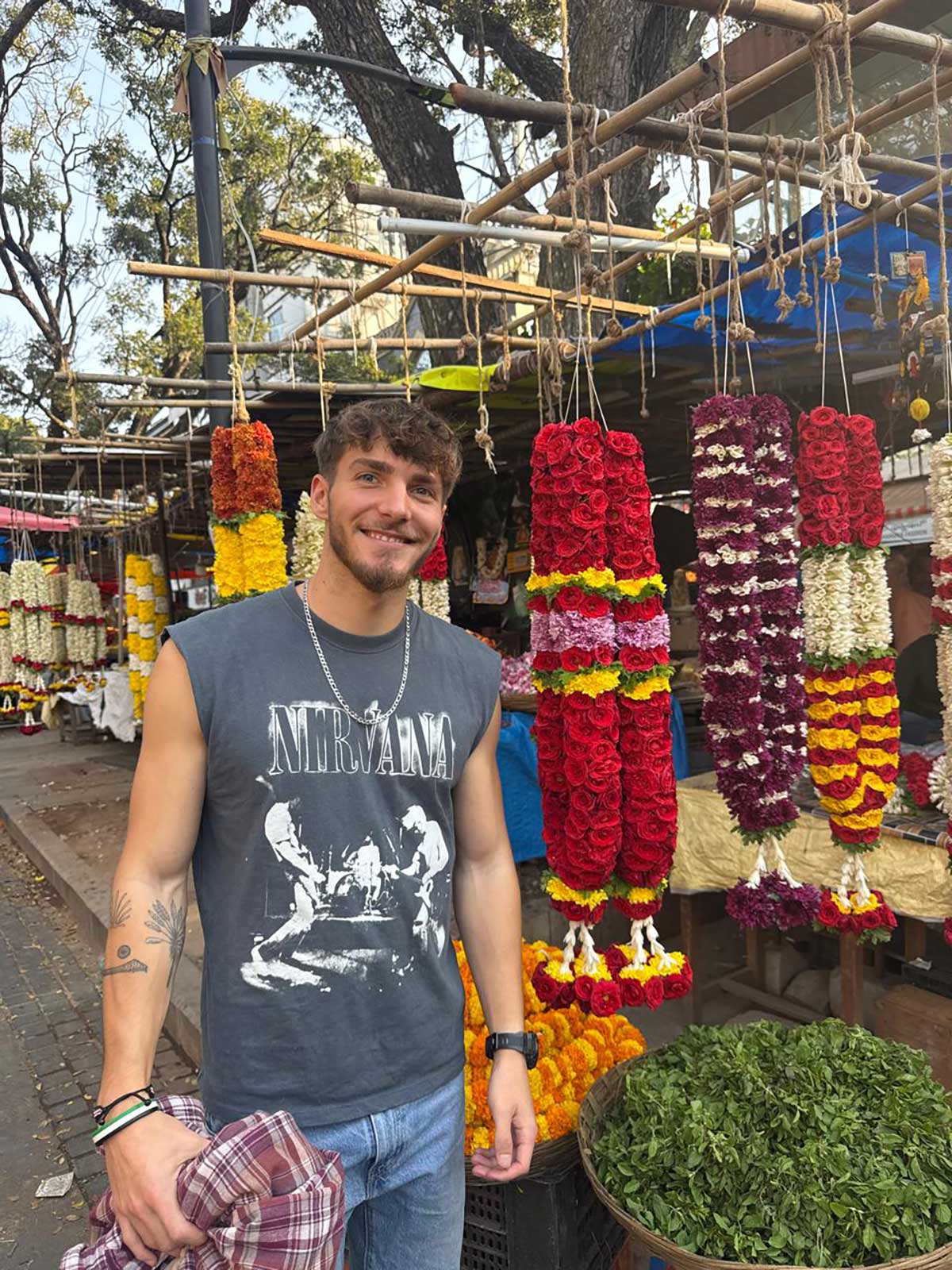
AUC students traveled back to Egypt by the start of the spring semester with an entirely new perspective on development across the Global South.
“Students need direct experience with a country in the Global South,” Adly said. “Unlike the Global North, we don’t have much written about the Global South. There is plenty that has been written about India, but it doesn’t do justice to such a complex country. Firsthand experience is not enough, but it’s a start. You need a couple of lifetimes in order to explore everything. Traveling is so important because it doesn’t only teach you new things but also shows you the limits of what you know.”
For Hahn, the trip wasn’t only exemplary for his understanding of global development; it also helped him connect with his Indian heritage. One of the professors at Christ University shared with him a project that documents the journeys of people displaced from East Bengal, where Hahn’s grandfather is from. “It helped open my eyes to how Indians interpret colonialism and post-colonialism,” he said. “I’m really excited to get my grandfather involved in this project, and I would never have known about it without this class.”
"Traveling is so important because it doesn’t only teach you new things but also shows you the limits of what you know."
All students came away with new lessons on development in the Global South. “I learned that despite our differences, we can always find similarities,” Fenoon concluded. “No matter how different we look or speak, if we put these external barriers aside, we can always find our core humanity. Being on the ground helps you see these differences that are always mentioned in the books but are hard to understand unless you’re there. I learned so much from being in Bangalore. Where before it seemed foreign, now it seems very human.”