

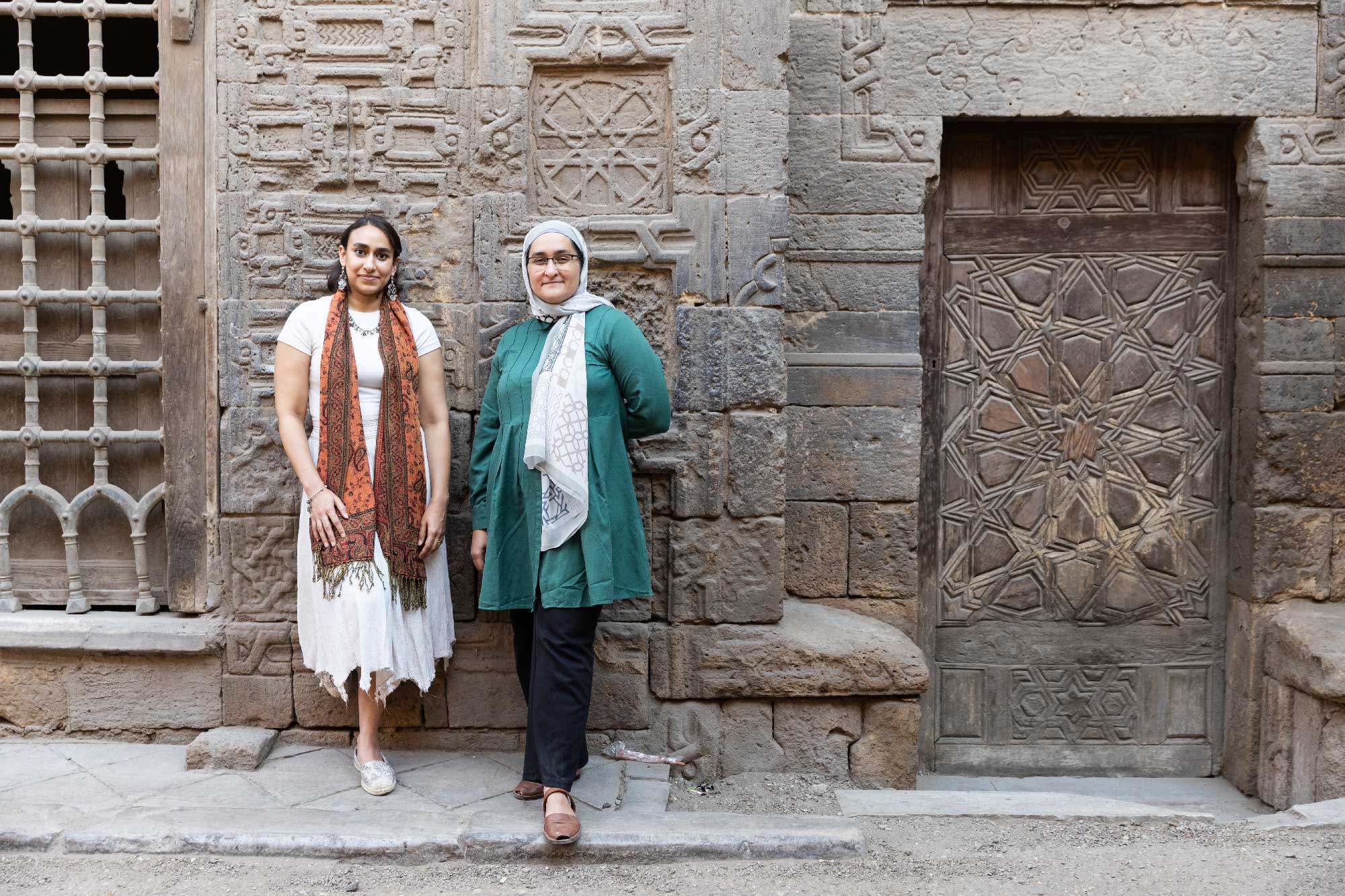
Led by two alumnae, Patterns of Cairo is helping artists and researchers rediscover the stories embedded in the city's architecture
Stepping into the heart of Historic Cairo feels like entering another era. Medieval minarets rise above the landscape, carved details texturing the layered tapestry of the neighborhood. Look closely, and those designs reveal something more than ornament: intricate motifs that tell the story of the city’s past, present and future.
Patterns of Cairo, an initiative by architectural practice Megawra with funding from the Embassy of the Netherlands in Egypt, documents these designs and the stories behind them. Ehsan Abushadi ’15, the project’s coordinator, and Yumna Moussa ’19, ’25, its lead researcher, help connect local and international communities with Cairo’s rich design heritage while preserving the patterns as a living tradition. The project database has been accessed by communities across Egypt’s 27 governorates and in more than 100 countries.
“Cairo is tied to so many parts of the world, and our patterns reflect that,” explained Moussa. “We want to limit any barriers for artists across the globe to having designs inspired by our heritage.”
The Path to Patterns of Cairo
Both alumnae found their way to Patterns of Cairo through Megawra. Moussa first encountered the organization through AUC’s Core Curriculum, an experience that inspired her to pursue a master’s in Islamic art and architecture. Abushadi, an architecture graduate, met Megawra founder May al-Ibrashy during her fourth semester. Throughout her time as a student, she worked with Megawra in a number of capacities — from focus groups and research to cultural programming — and following a gap year after graduation, she was eventually invited to come on as an architect and coordinator. After a break to pursue her master's degree, she returned to lead the Patterns of Cairo project.
“Each pattern is a micro history. ... The curated database is as representative as possible of material, time periods, techniques and influences. It’s a one-stop platform for all types of patterns, which can serve as an invaluable resource for designers and researchers.”
The idea originated with Dina Hafez ’09, who as a designer saw the need for a resource connecting contemporary designers with heritage, reliable drawings and information. In parallel, through its work in conservation and in developing the creative industries grounded in heritage, Megawra had also identified a similar gap. Hafez reached out to Megawra for its capacity to bring the idea to life.
The database brings to light a wealth of patterns and their histories since the city’s design language is unique, diverse and full of stories, Moussa explained. “Cairo is a historically and geographically unique location,” she shared. “The patterns here reflect how this city has always been a melting pot, from Chinese clouds appearing in tiles to Persian and Italian influences merging together.”
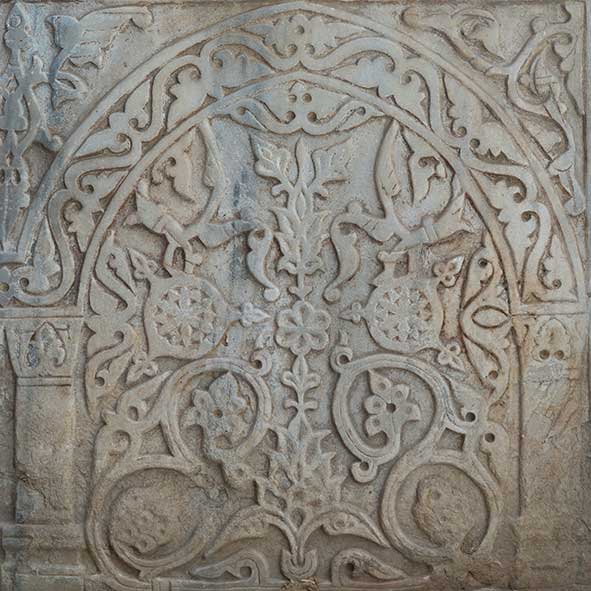
Each documented pattern began with a field survey of buildings, where they found a fusion of Egyptian and world cultures — from Central Asia to the Iberian Peninsula — within the decorative patterns, giving buildings their uniquely Cairene character. Since 2022, a team of architects, graphic designers, photographers and researchers has documented patterns across Historic Cairo, pairing each design with historical research, vector drawings and downloadable resources for artisans and designers through the Patterns of Cairo website (www.patternsofcairo.com), which combines narratives, a pattern gallery and glossary.
“Each pattern is a micro-history,” explained Abushadi. “For some, we focus on craft and materiality. Others are related to migration and trade, and yet others look at the symbolism behind certain motifs.”
Beyond the digital archive, the team also hosted Dutch-Egyptian exchange workshops that invited graphic, fashion, textile and product designers to reinterpret historic patterns in contemporary work. Those collaborations helped mark the website’s launch in July 2025 with an exhibition of the prototype designs.
“The curated database is as representative as possible of material, time periods, techniques and influences,” Abushadi explained. “It’s a one-stop platform for all types of patterns, which can serve as an invaluable resource for designers and researchers.”
After documenting Historic Cairo in its first phase, the project is now expanding into its second phase to cover 19th- to mid-20th century architecture across central Cairo. By the end of the second phase, the database will feature 275 unique patterns, each accompanied by its historical context.
Patterns as Storytelling
For the Patterns of Cairo researchers, a tile is not merely a design; it tells the story of the neighborhood, its people, and the cultures and histories that have shaped the city for centuries. The patterns reveal stories of everyday life in Cairo: how different cultures assimilated, how motifs endured for centuries and how artistic elements were adapted into an evolving Egyptian identity. Contemporary designers exist within this continuum, using what came before to create what comes next.
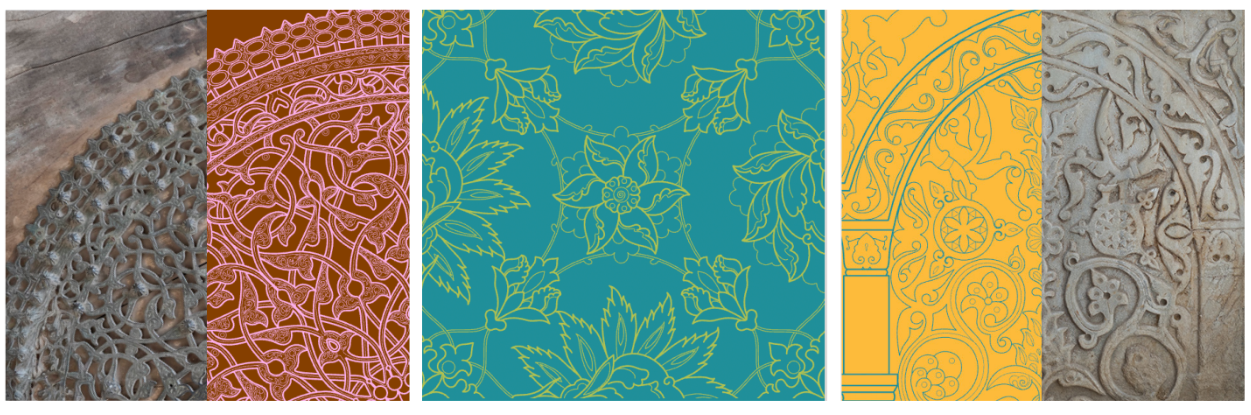
Patterns of Cairo hopes to facilitate the process of developing heritage-based patterns for designers, providing easy-to-access digital resources. “The advantage of the website is that it gives designers more confidence in approaching heritage as a resource for creativity,” Moussa said.
That heritage is also a record of Cairo's cultural diversity. “These patterns show how Cairo has always been a city of different religions, cultures and artistic traditions. Artisans from all over the world came to Cairo to create, and their impact is still visible on all these buildings,” added Moussa.
Echoing the same sentiment, Abushadi affirmed, “Patterns are a living heritage. The Fatimid, Mamluk and Ottoman periods aren’t separate like we’ve been taught; they exist in a continuum. We see this in Mamluk-inspired designs in the Ottoman period or Ottoman-inspired designs in the Khedival period. Contemporary craftsmen draw inspiration from the past and therefore become a part of the same living tradition. We are all connected to this continuum, and Patterns of Cairo seeks to help designers fully realize their place in this living history.”